I felt like approaching this trading issue from a different angle!
We have all had great trading sessions turn into nightmares after a small mistake turned into several like dominos… could be one afternoon, usually it was a Friday.
Many traders email saying just before they were about to pass a prop-firm milestone they blew it up.
How do other professions deal with this?
- In high-risk professions, a single mistake can also snowball into disastrous consequences.
- Pilots, surgeons, firefighters, air traffic controllers, and special forces operators have developed systems and habits to minimize errors and prevent cascading failures.
- These lessons can be directly applied to trading, where one emotional decision often leads to a chain of costly mistakes.
If you currently or have done or know someone who has worked in one of these professions PLEASE comment below. This is my own research…
Here’s a deep dive into how these professionals mitigate risks and how you can adapt their strategies to trading.
1. Pilots: Staying Systematic Under Stress
The Problem:
A single oversight—like skipping a checklist step or misreading an instrument—can escalate into critical situations.
A pilot friend of mine said that a minor flashing light on the way into land started a series of small errors that threw out his whole routine. It was the closest he came to crashing he said. He told me some of the below:
Their Solution:
- Checklists: Pilots follow strict protocols for every phase of flight to ensure consistency, especially under stress.
- Sterile Cockpit Rule: During high-stakes moments like takeoff and landing, unnecessary distractions are eliminated.
- Crew Resource Management (CRM): Training emphasizes communication, calm decision-making, and immediately addressing errors.
- Simulators: Pilots regularly train for emergencies like engine failures and sudden weather changes, ingraining methodical responses.
Trader’s Takeaway:
- Build and follow pre-trade and post-trade checklists to prevent lapses in focus. \
- Schedule breaks at the necessary times.
- Review your worst sessions and see what started it off and how to practice to avoid that cause.
- Simulate chaotic scenarios (like market volatility) using tools like random bar trading or replay mode to practice staying calm under pressure.
- Enforce your own “sterile cockpit” during trading hours—eliminate distractions and focus fully on execution.
2. Surgeons: Precision and Preparation
The Problem:
Small errors, like miscounting sponges or making an inaccurate incision, can lead to life-threatening complications. I read “The Checklist Manifesto” by Atul Gawande and tried to summarise it in a few points. Great book btw!
Their Solution:
- Pre-Operative Huddles: Teams review the plan before starting a procedure to ensure everyone is aligned.
- Time-Out Protocol: Before an incision, a team pause ensures all details (patient, procedure, plan) are correct.
- Focused Attention Training: Surgeons build the mental endurance to maintain precision during long, high-stakes operations.
- Post-Mortems: Mistakes are rigorously reviewed to learn and prevent recurrence.
Trader’s Takeaway:
- Begin each session with a pre-trading huddle to outline your plan and prepare for possible scenarios.
- Pause for a “time-out” protocol before entering a trade, confirming the setup aligns with your strategy. Also after a MISTAKE.
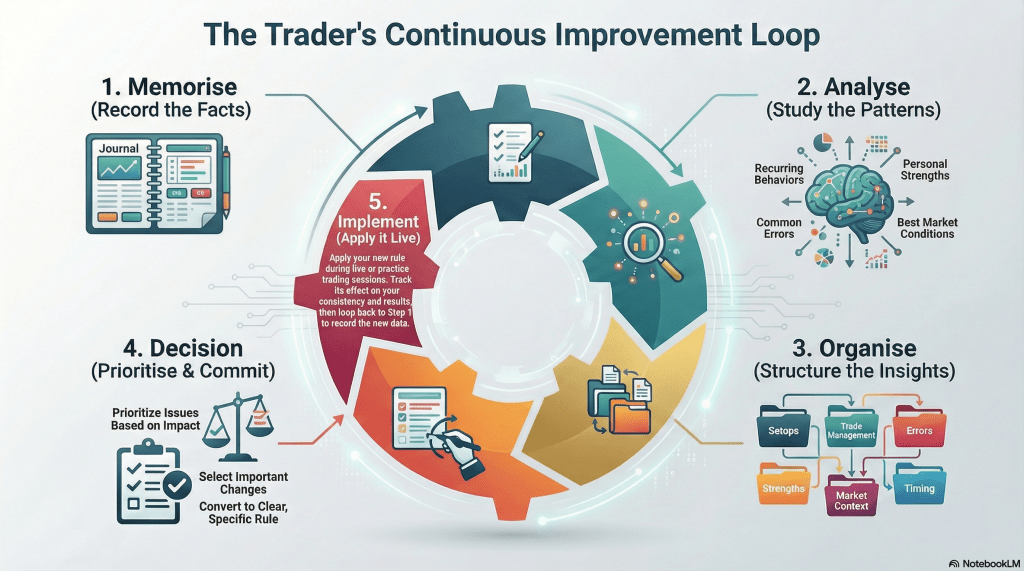
- Conduct post-trade analyses daily to examine errors and refine your approach.
3. Firefighters: Assess, Pause, and Act
The Problem:
Rushing into a fire without evaluating conditions can endanger both lives and property.
Their Solution:
- Acronyms: For instance, the PLACES mnemonic—Personal Protective Equipment (PPE), Lookouts, Awareness, Communications, Escape routes, Safety zones—serves as a general safety checklist for wildland firefighters.
- 360° Assessments: Teams take a moment to fully evaluate the scene before acting.
- Standard Operating Procedures (SOPs): Pre-defined protocols ensure consistent responses, even under stress.
- “Stop, Think, Act” Rule: In chaotic situations, firefighters are trained to pause briefly, reassess, and then proceed.
- Simulated Drills: Regular training under pressure reinforces composure and teamwork.
Trader’s Takeaway:
- Don’t turn the computer on and jump into a trade. Set a minimum timer to do a sitrep beforehand.
- Practice the “Stop, Think, Act” rule: if you make one mistake, stop trading immediately, reassess, and reset.
- Use SOP-like rules for trade management and position sizing to maintain consistency.
- Train for chaotic market conditions through drills and practice sessions.
Re training under pressure – In The Art of Learning, chess grandmaster Josh Waitzkin describes how he trained his focus by playing heavy metal music while practicing. By exposing himself to distractions, he developed mental resilience and the ability to concentrate under pressure. This approach, which he calls “stress inoculation,” helped him perform optimally in high-stakes situations by simulating chaotic environments. It aligns with his broader philosophy of refining skills to stay composed despite external disturbances.
4. Air Traffic Controllers: Precision and Clarity
The Problem:
Miscommunication or momentary lapses in focus can lead to catastrophic near-misses or collisions.
Their Solution:
- Clear Communication: ATCs use precise, standardized language to eliminate ambiguity.
- Workload Management: Controllers prioritize critical tasks first to avoid overwhelm.
- Stress Testing: Simulators prepare them to stay composed during high-pressure scenarios.
- Mandatory Breaks: Regular breaks prevent fatigue-based errors.
Trader’s Takeaway:
- Use clear, standardized notes in your trading journal (e.g., “setup valid, waiting for signal”). So you can go back to them. You do review your notes right? 🙂
- Prioritize critical decisions during volatile periods and avoid multitasking. Phone off, door shut, browser tabs closed.
- Schedule mandatory breaks during long trading sessions to stay sharp.
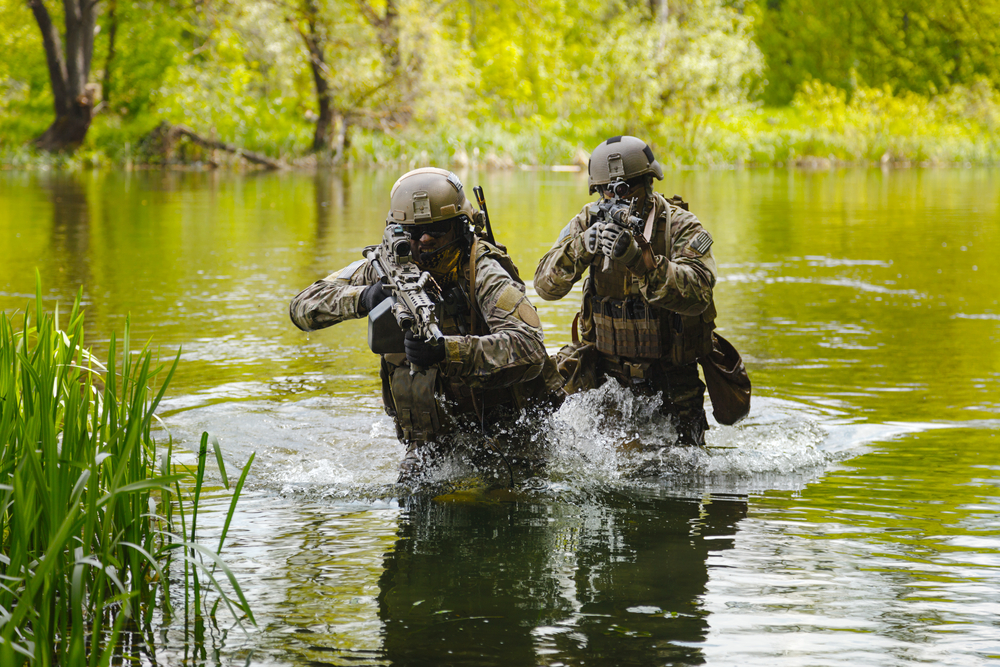
5. Special Forces Operators: Staying Calm in Chaos
The Problem:
A misstep, like a wrong turn or botched breach, can jeopardize the entire mission.
Their Solution:
- After Action Reviews/Reports (AAR): Every mission ends with an honest review of mistakes and successes.
- Muscle Memory Training: Operators rely on thousands of repetitions to ensure calm, deliberate action under pressure.
- Threat Prioritization: They focus on neutralizing the most immediate dangers first.
- Mindset Training: Mental resilience is built through stress inoculation, visualization, and physical challenges.
Trader’s Takeaway:
- Conduct After-Action Reviews after each session to identify what went right, what went wrong, and why. (My officer mate in the army said they spend way more time that you think on the AAR…)
- Focus on 1000s of GOOD REPETITIONS. Practice in NT8 market replay until you know exactly how to enter that setup.
- Minimise risk first. Protect account for tomorrow. Then focus on profit.
- Build mental resilience with techniques like deep breathing or visualization to stay calm under pressure.
- Use journaling to observe your own mind more and more.
A Practical Training Framework for Traders
To break the mistake chain and maintain composure, I have 25 strategies above that can be used. I do many of them and I’m trying to practice with more of them to improve my own trading.
By learning from these high-stakes professionals, us traders can build systems that prioritize discipline, composure, and systematic decision-making.
Whether you’re flying a plane, performing surgery, or navigating the markets, the key to success lies in breaking the mistake chain before it spirals out of control.
What steps will you take to build resilience in your trading today? Let me know in the comments below!

 Zen Trading Tech
Leave a comment