Summary
- In this post we discuss the concept of ALWAYS IN trading and how you can use it to find entries in that direction
- I recommend a range of drills below. Set a timer for 20 minutes and go and find all the examples you can for the first drill. Then repeat for the second, and so on.
- I guarantee it will influence your trading next week!
⚔️ The Way Is in Training
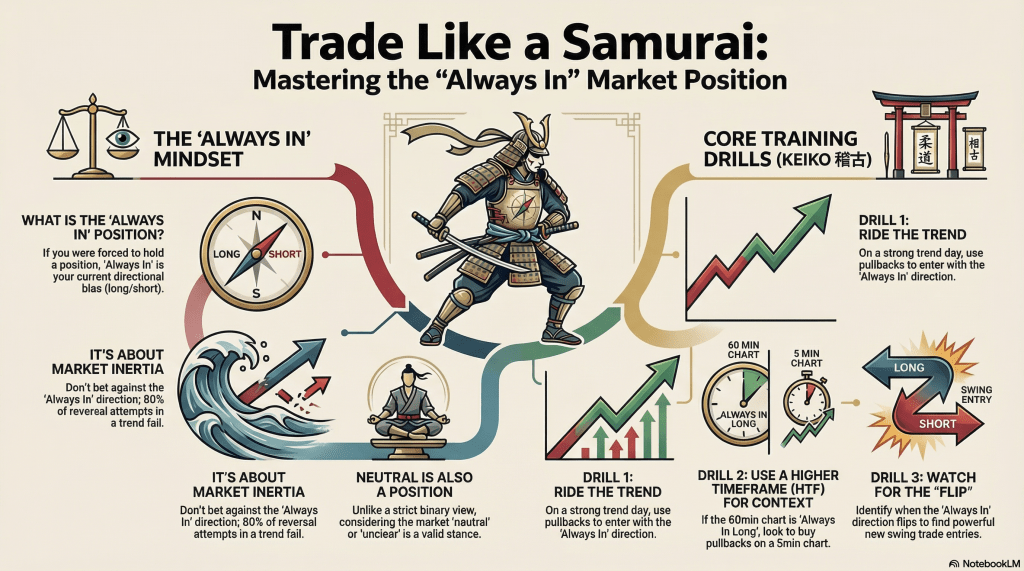
The samurai had a saying: 道は稽古にあり (Dō wa keiko ni ari) — the Way is in training.
All mastery comes from repetition of the basics — not to reach an end, but to refine awareness itself.
Kihon (基本) is not a stage you pass through. It’s the foundation you never leave.
Each practice — each keiko (稽古) — is an opportunity to polish both technique and spirit.
Instructions
Always in definition
- To find out more go to the Book “Reversals” by Dr Al Brooks
- I have an indicator – based of one of Al’s definitions. Consecutive bars closing above the MA, one being big and closing on/near its high.
- You can also ask yourself questions:
- If you HAD to be in the market at all times, ALWAYS IN is your current position
- ALWAYS IN is different to trend trading, because many trend traders don’t hold a position when market is unclear
- If you look at the market and say I wish I was X right now, X is the always in position
- I use a slight variation from other traders, because I don’t believe Always in is binary.
- Some traders argue market at all times is either AIL or AIS. I prefer to have a neutral zone = this helps me to trade.
- For me unclear, is neither.
- How I use Always in
- Always in swing trading – don’t bet against it – It is a swing style of trading – looking for 3 – 5 setups a day
- Always in Flip – start of a move
- Always in traders exit – scalping next 1 – 5 bars
- For now start with consecutive strong bars closing above MA / below MA
Indicator
Drill #1: Trend Day – Don’t Be the First to Bet Against Always In Position
- Why? INERTIA. 80% rule. 80% of reversals will fail in a trend. 80% of breakouts will fail in a trading range.
- Enter on pullbacks
- Fade breakouts against
- Aim to run counter trend trader stops


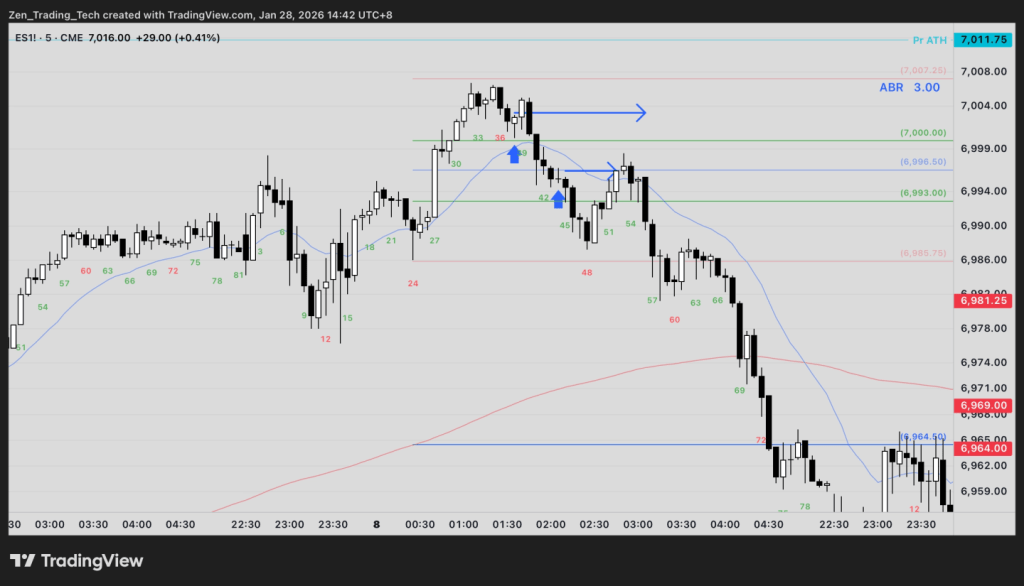
Drill #2: HTF Always in (ie use 60 minutes chart)

- If 60m above MA, always in long
- Look to buy pullbacks on 5m chart
- Enter at 5m MA
- Look for 2 – 3 legged pullbacks to fade
- Bet on strong selloffs to become DBBLF
- When to stop?
- Second Entry Short (2ES ) on 60m is triggered then expect more TR
- Sometimes they lose the 5m MA, and instead rally from 60m MA (which is 5m 200MA) look for wedge pullback for swing to a new high
- Bear example below just flip the text

Note: No definition is perfect – here indicator is late

- Indicator is to help train the eyes, not as perfect filter for trading
Drill #3: Always in Direction Flips – Walmart

Always in Flip
- Always in by context – 3 legs down in a wedge bottom so some traders might say always in before price action confirms
- Always in by price action – using the indicator and definitions at the start of the article
Walmart
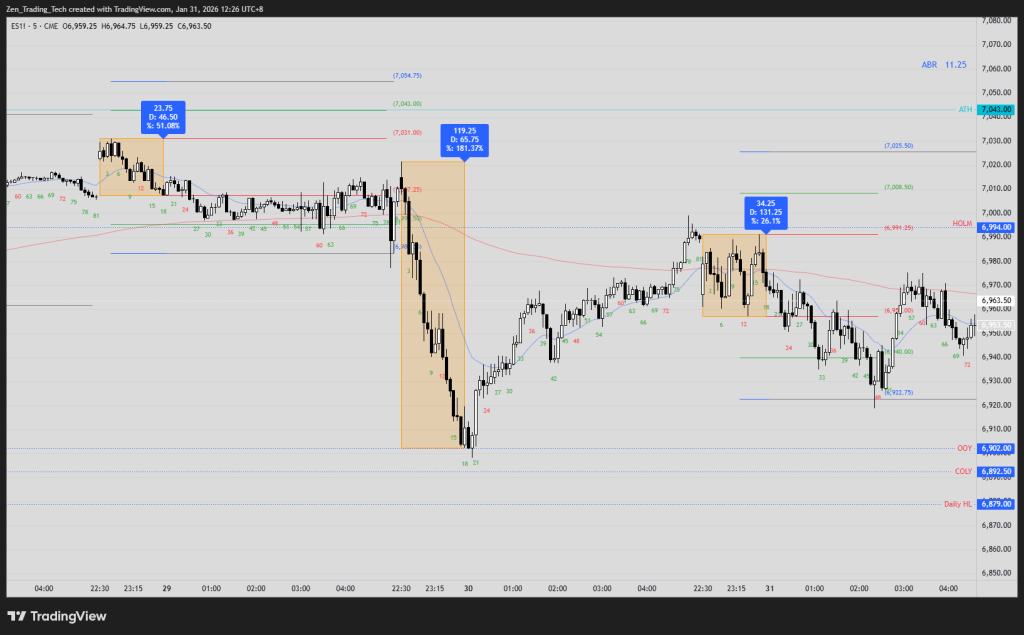
- On ES, Al says, 90% days have a 20pt swing from a decent B/S SB
- It is relative to current volatility.
- 50pt average range, swing is 40% of that so you can use those measurements for other instruments and VIX levels.
- Sometimes multiple swings
- Look for 15m reasonable entry also

Drill #4: Always in Direction Flips – Buy Pullback for Swing

- Alternative entry technique for the above
- Once we flip always in it resists immediate change
- Once triggered buy below,.
- Buy first pullback
- Fade opposite breakout

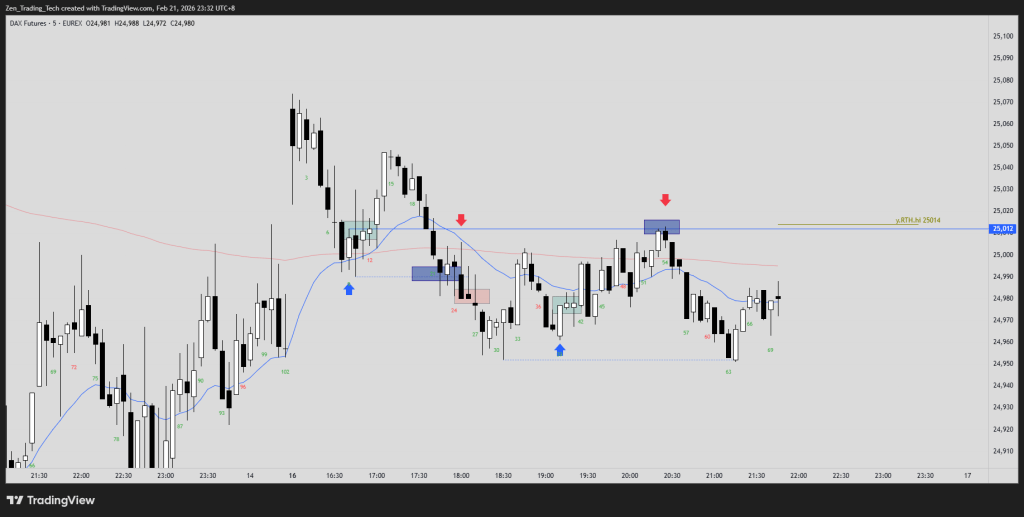
Drill 5: TR, Always in long , buy below, always in short, sell above

- Ideas for exploring how to use in a TR or more of a channel
- Always in Flip TR/CH
- Buy below
- Buy back at MA
- Buy in BZ
- Fade opposite stop entries
- TR/CH usually disappoint FT but not opposite strength
- Failures
- Flip S/R
- Careful
- One more bar concept
- B27 pullback failed

Careful
- One more bar concept
- B42 needed FT to flip
Drill #6: Always in becomes Support / Resistance

Always in S/R
- Test back to flip area
- If finds support here trade 2nd leg
Drill #7: Bull Day, Moment it goes “Always in Short” is the low for the afternoon

- Gap Up
- Bullish day
- Moment it “flips” always in short is LOW for the afternoon
- Became DBBLF
- Was MA Gap bar buy setup
Drill #8: Always in a TR

- Always in means bad FT
- won’t get that last bar that you want in a TR/TRD
- Aggressive traders bet they won’t and EXIT is they do!
- Here every time indicator lights up was a good FADE
🏯 Conclusion
- Using an always in method is a great way to find 2nd leg trades
- Hopefully the above inspired to you to research Al Brooks’ material again and practice the drills above!
- Enjoy 🙂

 Zen Trading Tech
Leave a comment