Most traders think their edge is in their strategy.
But the deeper I’ve gone into this game, the more I’ve realized:
My real edge is repetition. Pattern recognition. Conditioning. Preparation.
What are my repeated weak behaviours in trading and how I can improve on them to become better.
Let me explain how I got there — and how flashcards changed the way I trade.
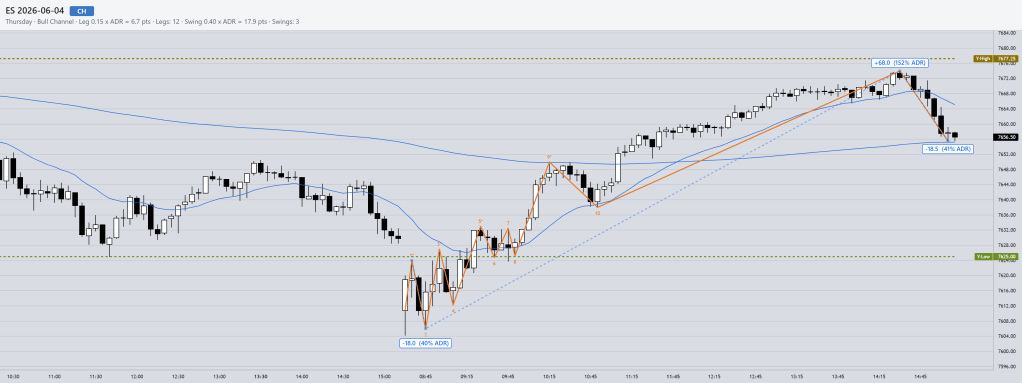
I take time to open a flashcard and then review yesterday’s price action from the perspective of that card.
Sometimes I will set a timer – 1 minute per card or longer. Or just go through each card and find all the patterns and move on.
📈 Step 1: See the Math Behind Your Trades
Early on, I started tracking my trades more visually.
- Entry and exit marked.
- Initial risk (the stop loss I started with).
- Actual risk (what I really risked once I adjusted).
That simple exercise revealed something most traders miss:
Not all wins are good. Not all losses are bad.
When you understand the risk-reward maths behind every trade, you start making informed decisions.
🔁 Step 2: Continuation vs. Reversal – Know Your Game
The next thing I looked at was the type of trades I was taking.
Not all trades are equal — especially when it comes to hit rate.
Here’s what I found:
- If I focused on continuation trades, my win rate was solid. That gave me room to take less or more than 1R and often add.
- But when I took reversal trades, my hit rate was near 20%. That would’ve been fine if I was getting 5R reward. But I wasn’t. I was barely getting 2R.
The lesson?
If the maths doesn’t work, neither will your strategy.
Tracking this helped me strip out low-quality trades and refine my approach. Most of trading is of a breakout continuation style.
🧠 Step 3: Flashcards for Trader Conditioning
This brings us to the game-changer:
Daily flashcards.
I’ve been doing this for years now.
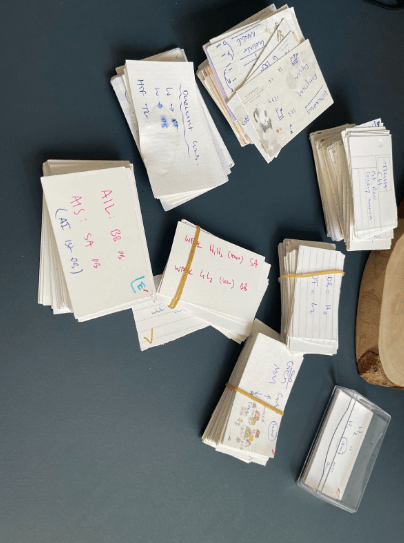
The first time I built my deck, it had over 60 flashcards. It took me 5 hours to get through. I was so slow at finding patterns.
And I got so tired after only 5 minutes
But over time with practice it becomes faster and easier. Now hardly much stress at all.
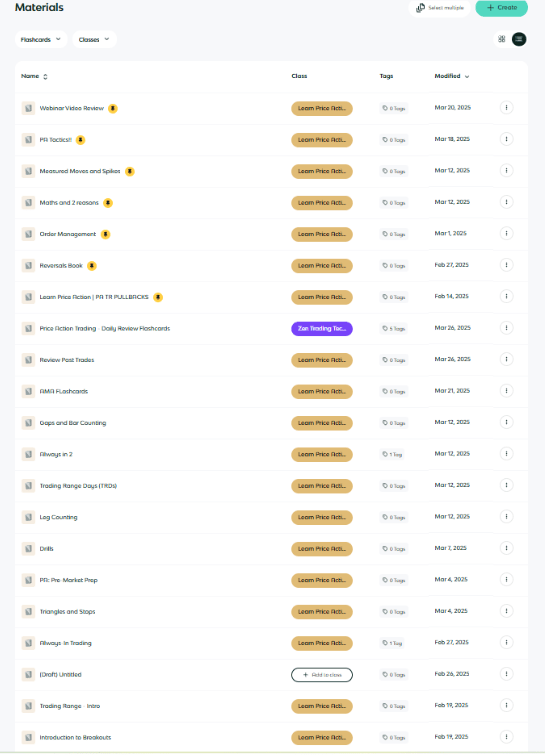
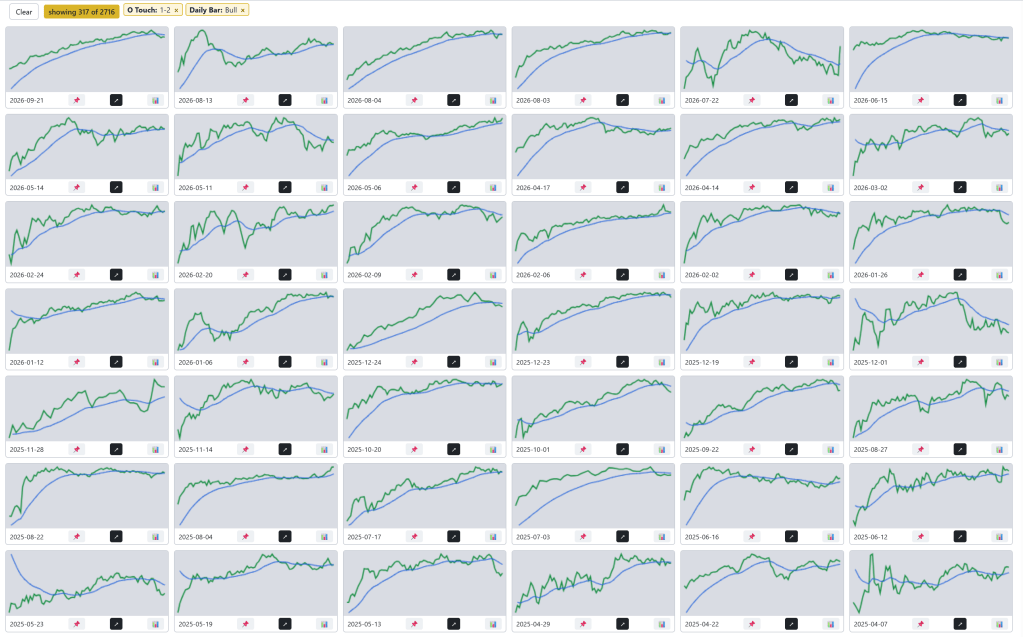
Now my daily drill listing has well over 100. Most of which I put into the deck below.
I can review my full list in under an hour and not too bad.


Why it works:
It’s not about memorization.
It’s about conditioning your brain to see recurring setups across different timeframes:
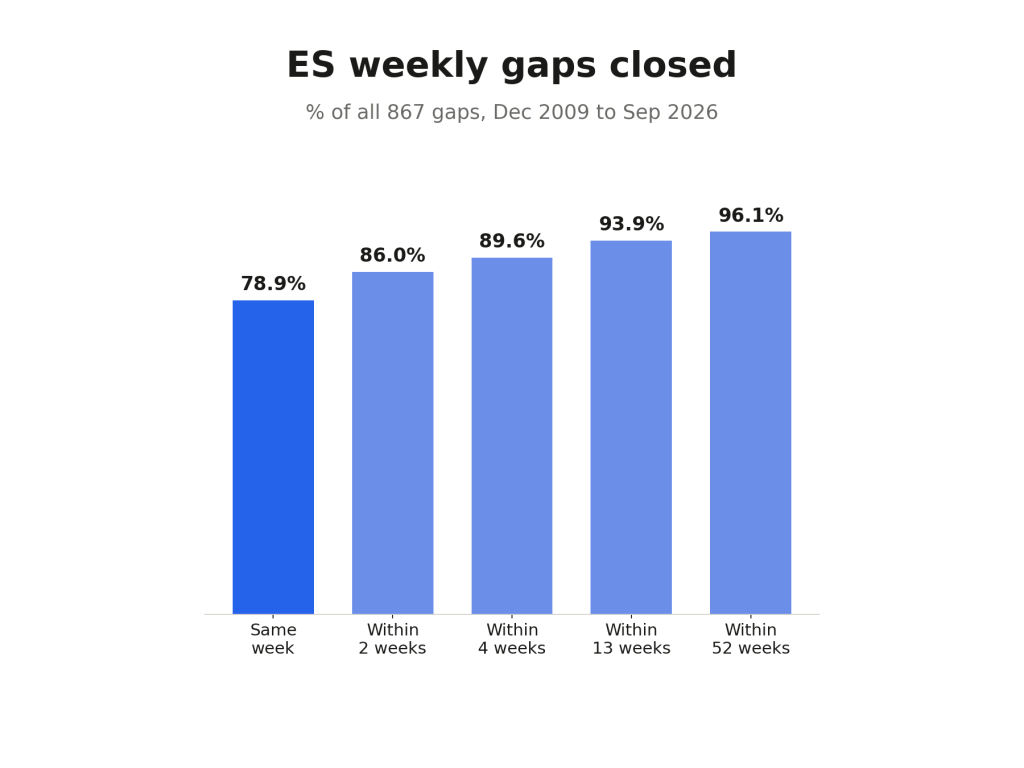
- Weekly
- Daily
- 60-min
- 15-min
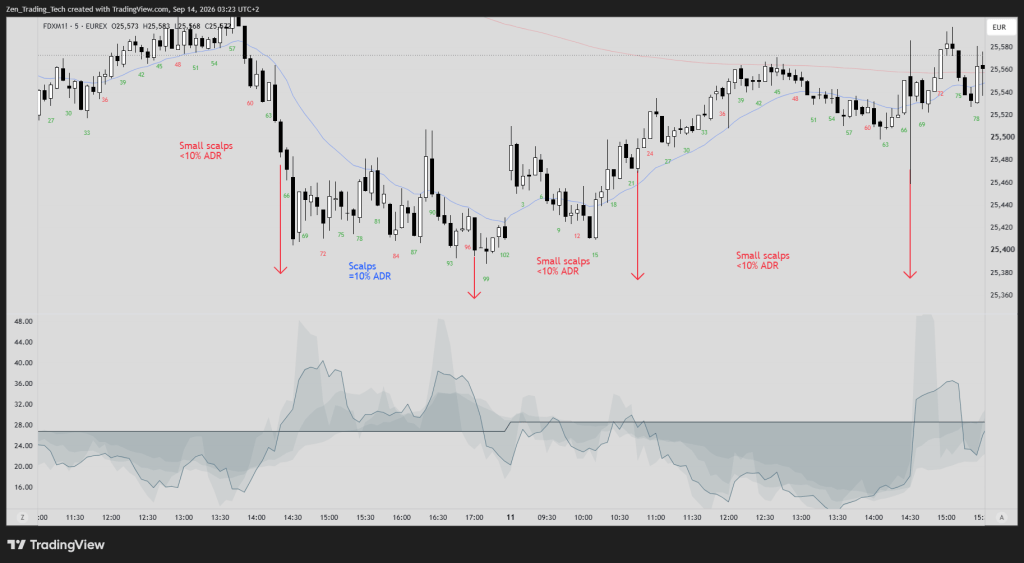
- 5-min
- Open of the Day
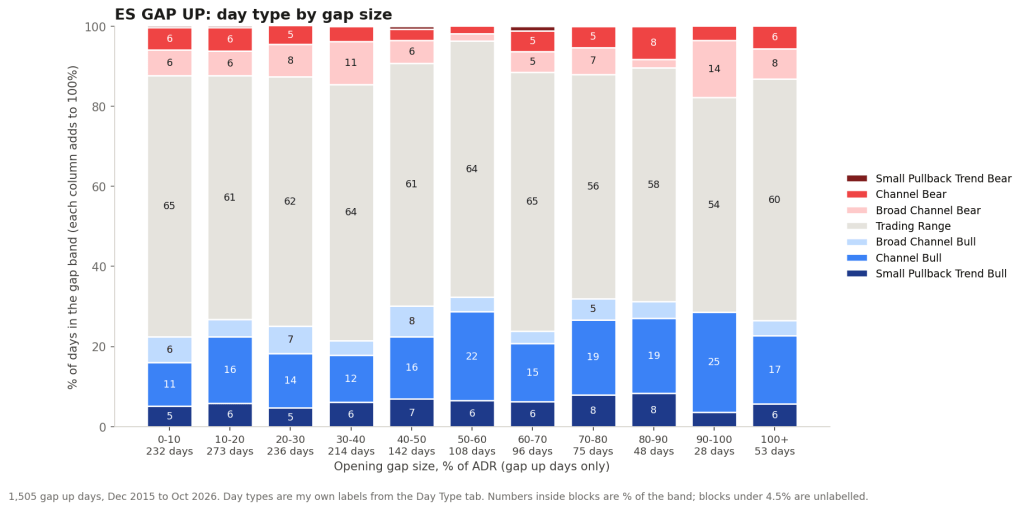
- Day Structure (Trend Day vs Trading Range Day)
Every flashcard is built from a real trade — good or bad.
Some made me money. Others cost me.
But all of them taught me something I didn’t want to forget.
🛠 Try It For Yourself (Free Resource)
If you want to try it yourself, I’ve uploaded my flashcard deck here:
👉 ZTT Flashcard Deck on Knowt
Open a flashcard and then review yesterday’s price action from the perspective of that card.
Also – I’ll be uploading more over the coming weeks:
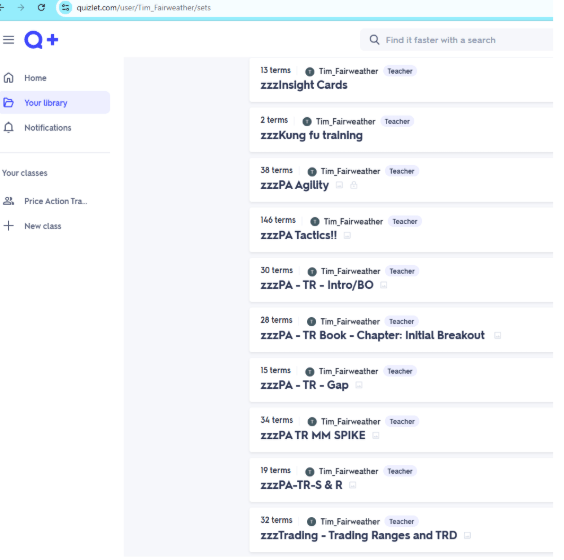
I’ve tried Anki, Quizlet — all of them. Knowt is the easiest and best for this use.
Once you’re in:
- Start reviewing the deck
- Let me know which cards are unclear — I’ll add extra notes or audio
- Use it daily to sharpen your edge before the market opens
🧩 Bonus: Make Your Own Deck
This is where the real power comes in:
- Screenshot your own trades (good or bad)
- Turn each trade into a flashcard — just one per card
- Add a quick note: What worked? What didn’t? What should I remember next time?
When I started reviewing my own mistakes before the session, performance changed.
I became more present. More prepared. Less likely to repeat the same errors.
🎯 Final Thoughts
Flashcards aren’t magic.
They’re just a tool — but a powerful one.
When used right, they become your pre-market conditioning.
Your mental warm-up.
A way to lock in the lessons you’d otherwise forget.
If you’re serious about leveling up your trading — not just intellectually, but habitually — start using flashcards.
And if you do?
Let me know how it goes. I’d love your feedback.





Leave a Reply