Every trader eventually faces this moment:
“I took the same setup two days in a row. One worked. One didn’t. What did I do wrong?”
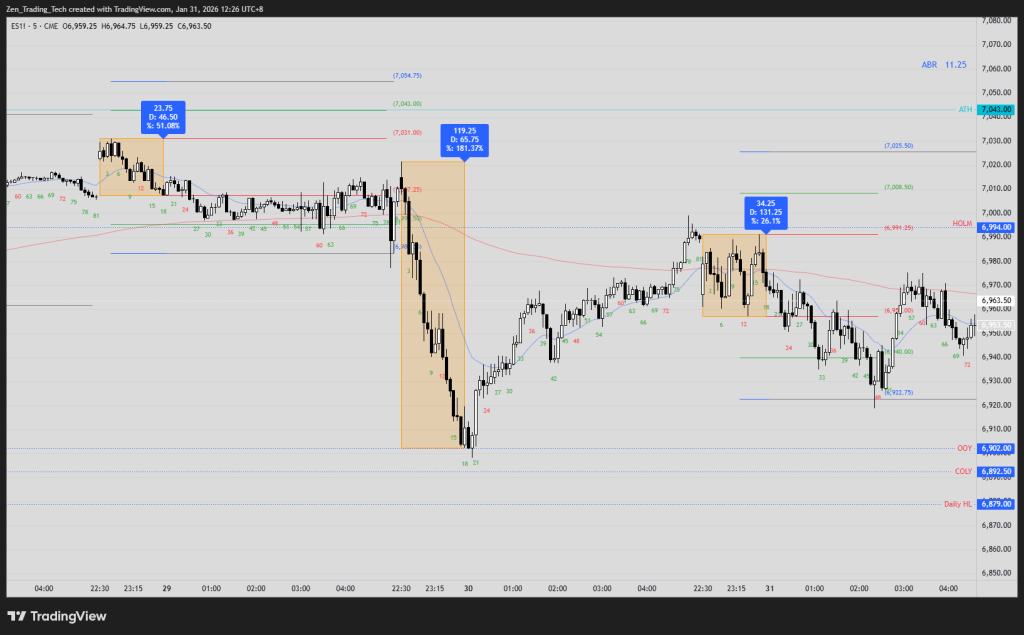
A trader recently sent me this exact question after trading two microchannels—one long, one short—with completely different outcomes. It’s a great question because it cuts to the heart of professional trading:
Are we making bad decisions, or is this just probability at work?
Let’s break this down.
✅ Start With This: Know Your Setup
The trader in question was focused on microchannels, and that’s a good thing. Microchannels occur often, are easy to spot, and form a strong base for a strategy. But here’s the truth:
Pattern recognition is only the beginning.
Strategy comes from understanding the behavior of the setup across hundreds of examples.
So I always ask:
- Have you looked at 100+ microchannels?
- Do you know which ones tend to give second legs?
- Which fail fast? Which grind sideways?
- If they work, how many bars does it usually take?
- Is it better if it is with or against the trend?
- Early or late leg?
Most traders don’t know. They see the setup. But they haven’t done the deeper work.
🧠 Success & Failure Are Not Binary
One of the key lessons in this Q&A was this:
A trade can fail and still be a good trade.
A trade can win and still be managed poorly.
You have to measure:
- Did it behave as expected?
- Did you follow your plan?
- Did the failure happen within your acceptable parameters?
Example:
- A pullback that comes back 50%? Expected.
- Comes back 70%? Probably a bad sign.
If you know your numbers, you won’t panic—you’ll exit with confidence or hold with conviction. Repeated over hundreds of trades will solidify your edge.
📊 Do the Work: Your Strategy Needs Structure
If you want to master a setup like microchannels:
- Study 100+ examples. Use screenshots. Mark up successes and failures.
- Track the metrics:
- Pullback depth
- Second leg probability
- Number of bars to target
- Stop-out percentage
- Decide your rules. Will you:
- Enter on breakout?
- Wait for 50% pullback?
- Scale in or single entry?
Your edge isn’t the setup.
Your edge is your plan around the setup.
🔁 The Real Mistake: Changing Strategies Mid-Trade

The trader who asked the question adjusted their trade management after seeing a strong move the previous day.
One day they scalped. The next day they held—and took a loss.
What changed?
Their plan.
They let FOMO from yesterday rewrite their strategy. That’s not a probability loss—that’s a process error.
Professional traders stick to the same rules before, during, and after the trade. That’s the only way to collect meaningful data and improve execution over time.
🧘 Zen Trading Tech Takeaway
- Focus on fewer setups, and master them.
- Separate decision quality from outcome.
- Let go of “right vs. wrong” and embrace structured learning.
- Journal your setups, track variations, and refine consistently.
- If you break your own rule, that’s the only true mistake.
If this resonates, review your trades this week and ask:
Did I follow my process—or did I improvise?
Stick to the plan. Trust the math.
You’re not trading for today.
You’re building a track record.
— Tim
Zen Trading Tech

 Zen Trading Tech
Leave a comment