Summary (TL;DR)
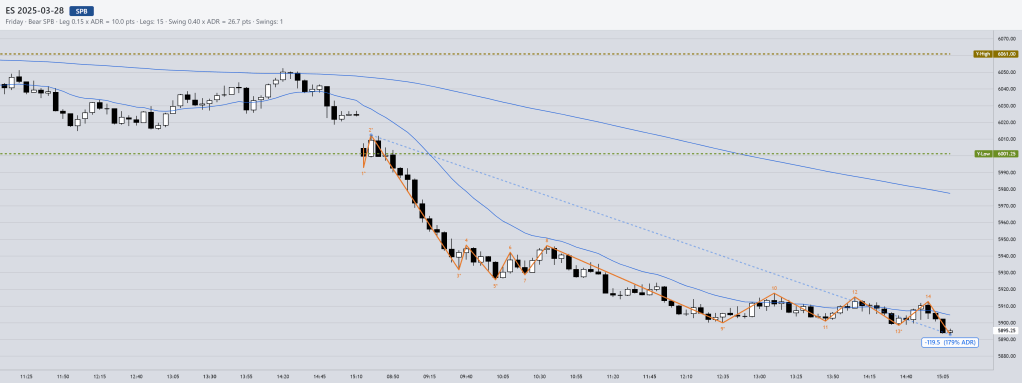
- I wrote a post on leg counting, then a post on trend days. I should have written this one in between. I got excited.
- Legs alone did not separate trend days. Swings do. A swing is the link between the two posts.
- The average ES day: 15.6 legs and 3 swings. A swing holds about 5 legs. Both directions.
- Trend days make fewer swings, and longer ones. A Small Pullback Trend swing averages about one full average daily range. A trading range swing averages about two thirds of one.
- The pullbacks inside a swing are the same size on every type of day. Trend days do not have smaller pullbacks. They just keep going after them.
- Which is why I think most traders will do better as swing traders who scalp out of swings, than as pure scalpers.
The missing post
In Not Another Post on Leg Counting! I counted legs.
In What is a Trend Day? I hand-labelled every ES day by type. Still recovering.
In the trend day post I said leg counting did not separate trend days. That was true. But I had never asked the obvious next question: if a trend day is not made of fewer legs, what is it made of?
Simply: legs build swings, and swings build the day type. You need the middle one to get from the first to the last.
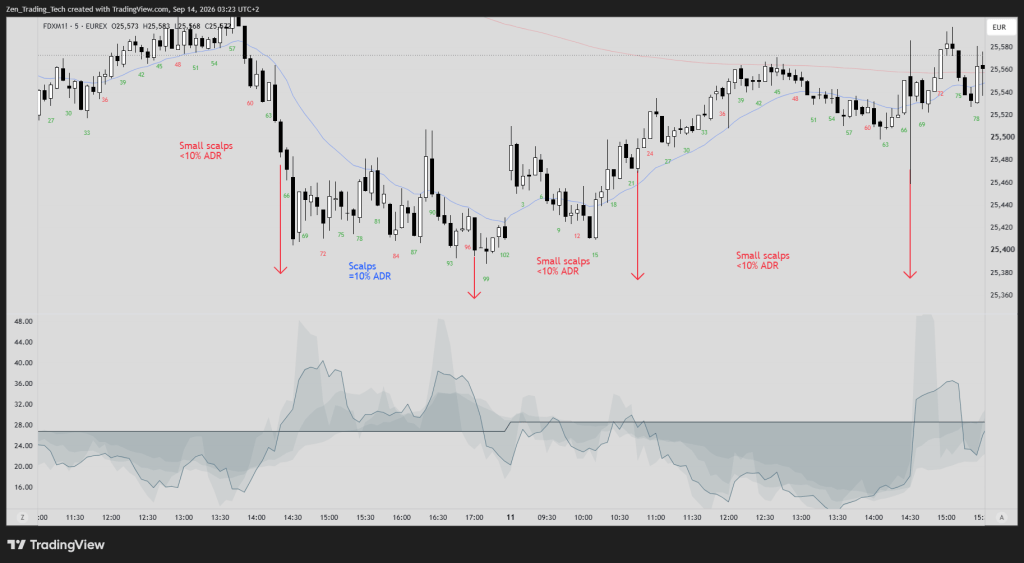
Scalps, legs, swings
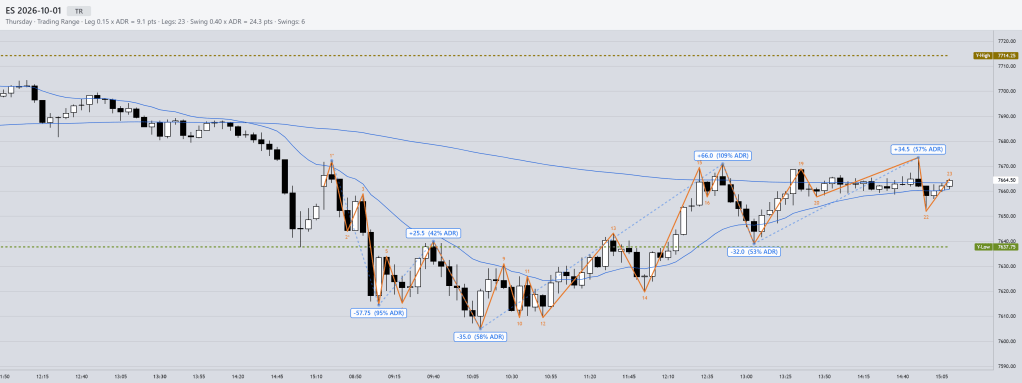
Three sizes, all measured against yesterday’s average daily range (ADR is 8-day average of the daily range).
- Scalp: 10% of ADR.
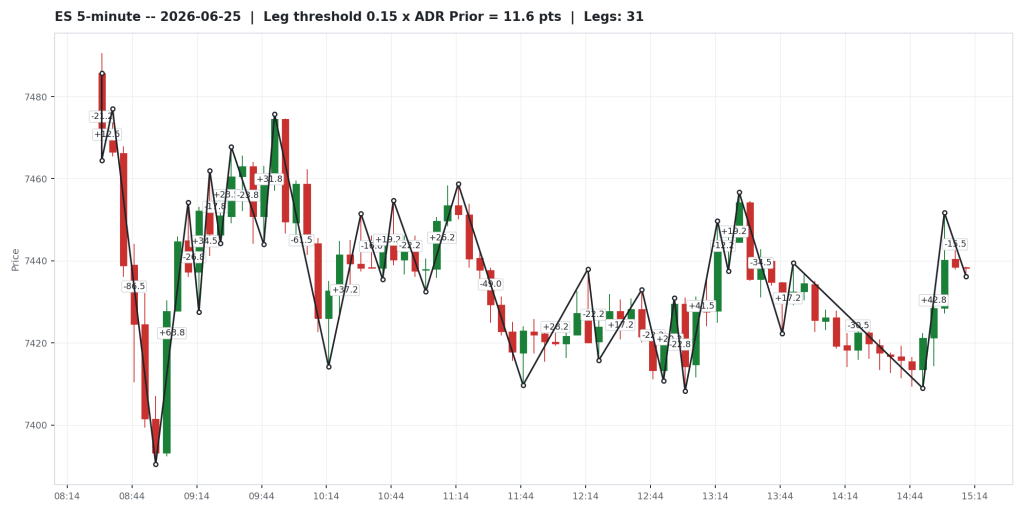
- Leg: At least 15% of ADR. Slightly bigger than a scalp, so someone has room to get in and out.
- Swing: At least 40% of ADR. Built from legs.
Here’s the bit that matters. From the leg post: “when an opposite trader can get a scalp, that leg has ended.” A swing works the same way, one size up. A swing is not finished until there is an opposite swing. Pullbacks smaller than that are just legs inside the swing.
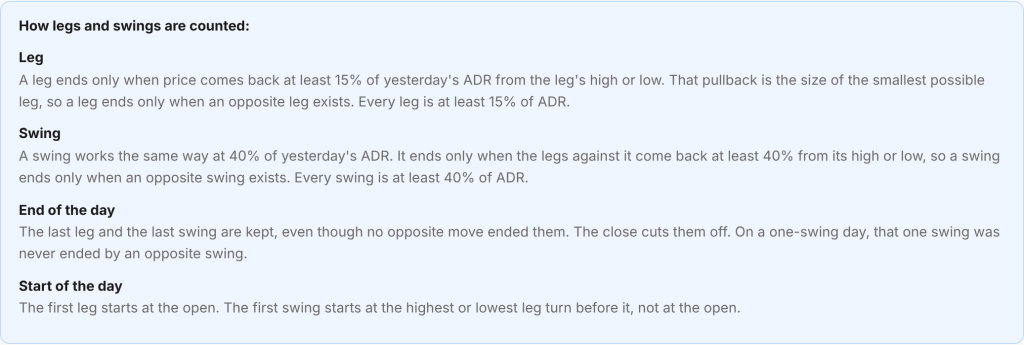
One thing to know about the end of the day: the last leg and the last swing are still counted even though nothing reversed them. The close cut them off. So a “one swing” day is a day that went one way and never gave the other side a swing.
The average ES day
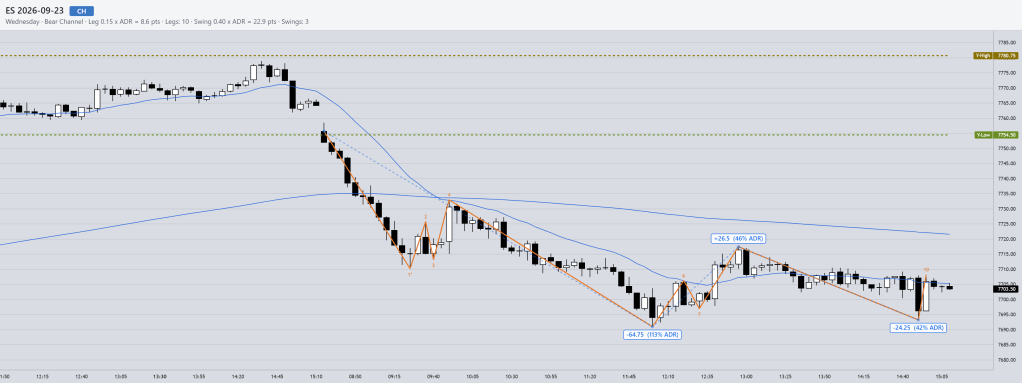
Every ES day session from December 2015 to 2 October 2026 that has one of my day type labels. 2,725 days. Bull and bear days together for now.
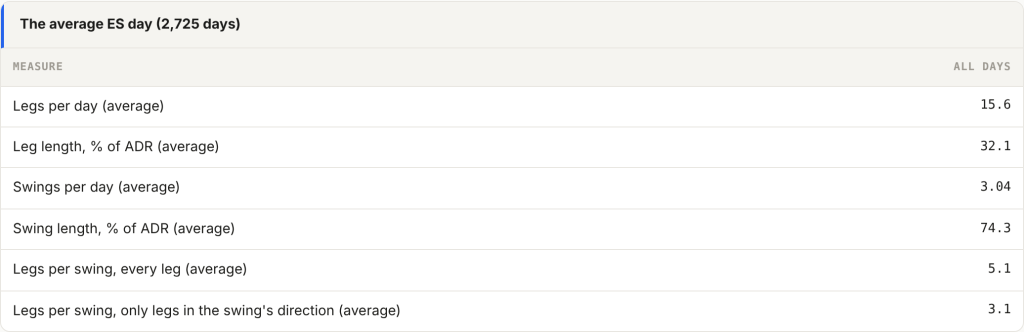
15.6 legs of about a third of an ADR each.
3 swings of about three quarters of an ADR each.
And the legs per swing number surprised me. I expected two and a bit. It’s 5. I forgot that legs go in both directions. The legs inside a swing go with it and against it in turn, so a swing always has an odd number of legs: 1, 3, 5 and so on. A swing with one pullback is 3 legs, 2 with it and 1 against. Count only the legs going the swing’s way and it’s 3.1.
Making sense of the stay in for the next hour or two, exit after 3 legs advice.
And the day types, from the trend day post:
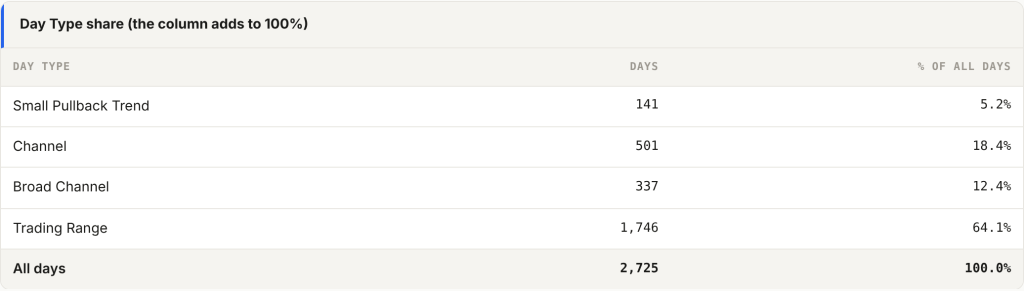
Trend days (Small Pullback Trend plus Channel) are 23.6% of days. It was 23.4% in the trend day post – a few more days have been added since… Good boy Tim.
Legs by day type
My idea going in: Small Pullback Trend days have fewer legs, but bigger ones.
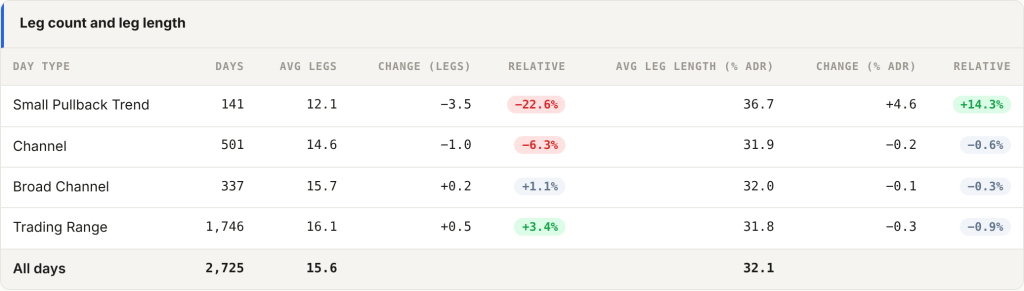
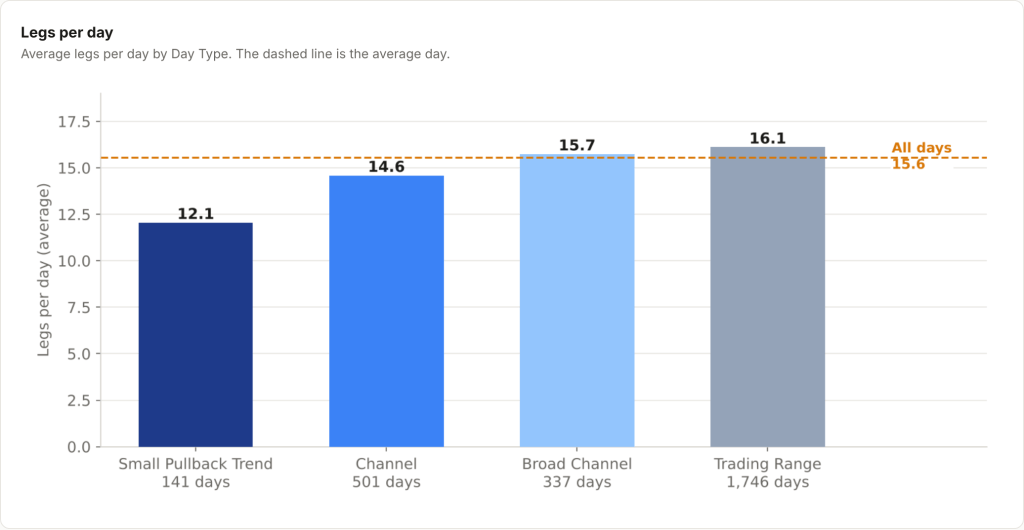
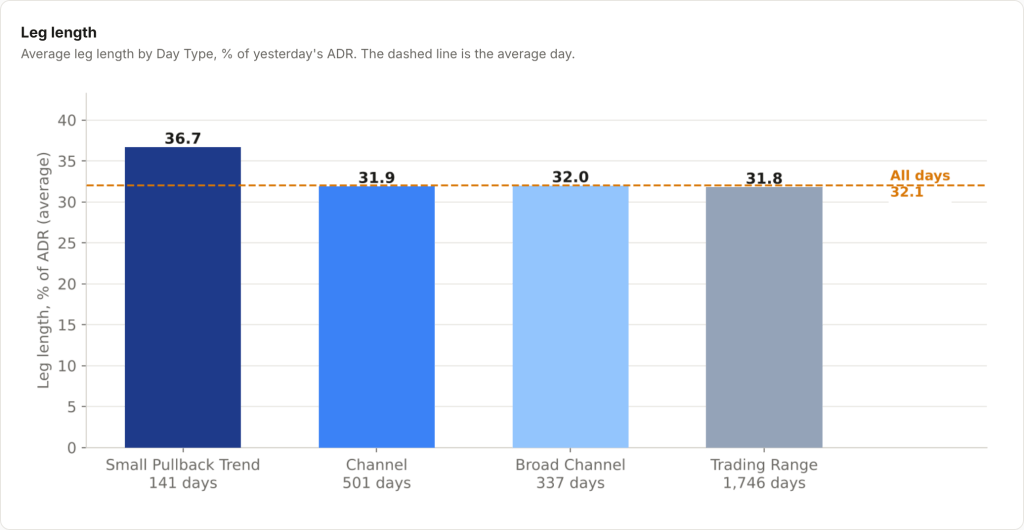
Half right.
- Small Pullback Trend days have about a quarter fewer legs, and each leg is 14% longer than on the average day.
- But Channel days have almost the normal number of legs, and the legs are the normal length. Broad Channel and Trading Range are the same. Outside of Small Pullback Trend, a leg is about 32% of ADR on every type of day.
- That’s why legs on their own could not find my trend days. Channel days are 18% of all days, and leg by leg they look like everything else.
One housekeeping note. The day type chart in the leg counting post (where “Trend day” averaged 8.4 legs) came from an older automatic day type column. These numbers use my hand labels from the trend day post. So the two posts will not match.
Swings by day type
Bars -> Legs -> Swings -> Days -> Success
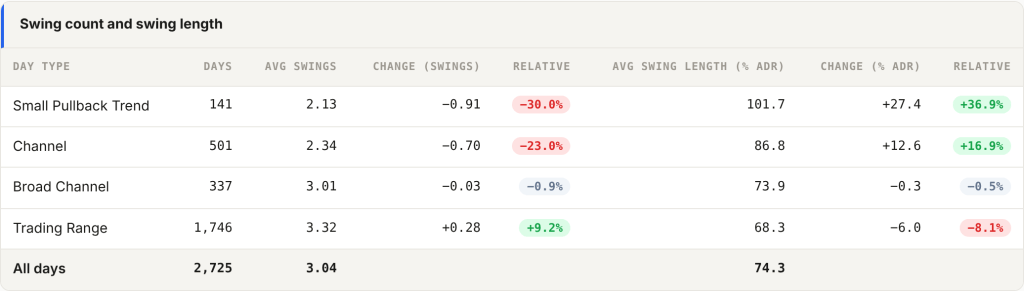
Now the same question, one size up.
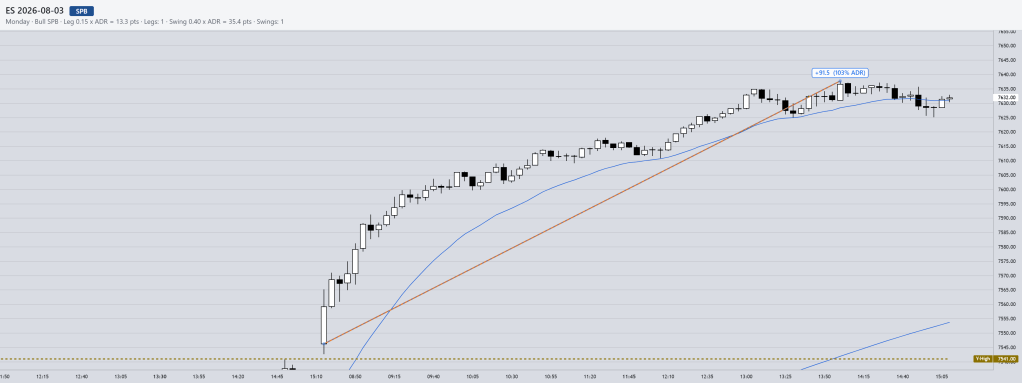
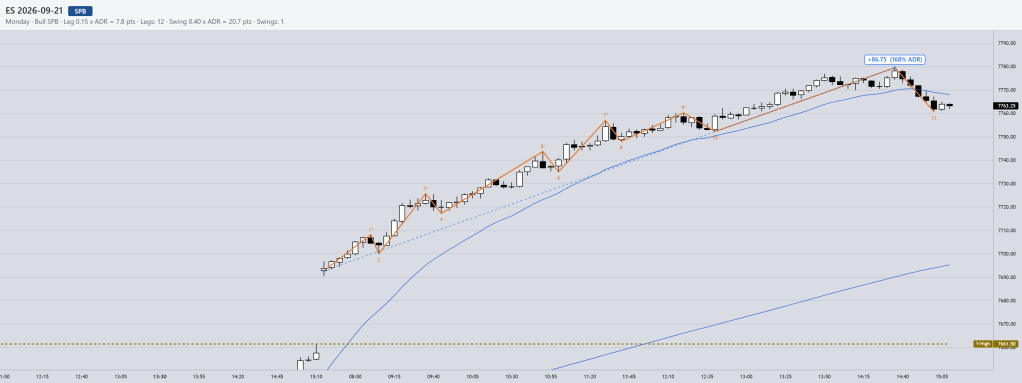
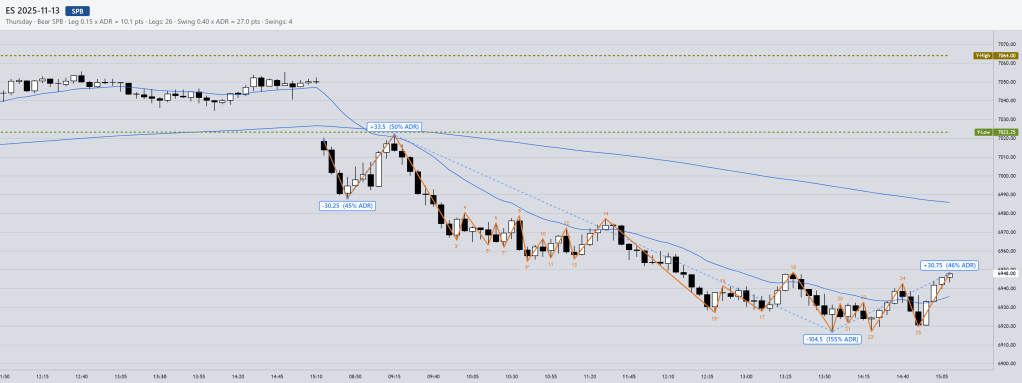
Small Pullback Trend Day
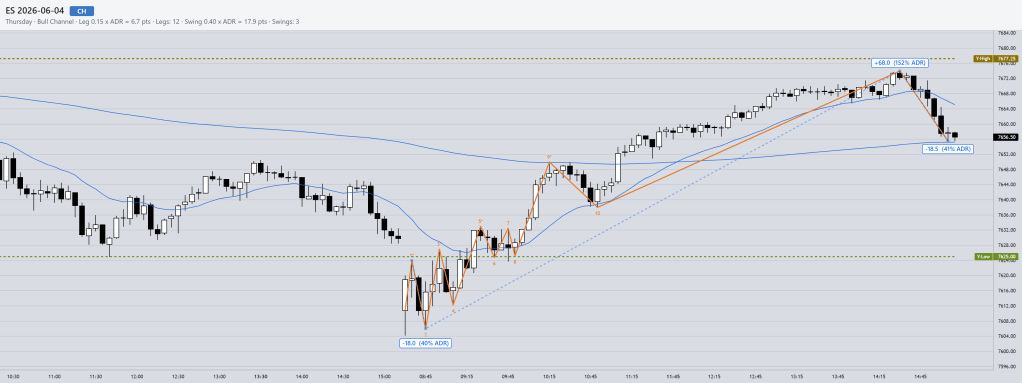
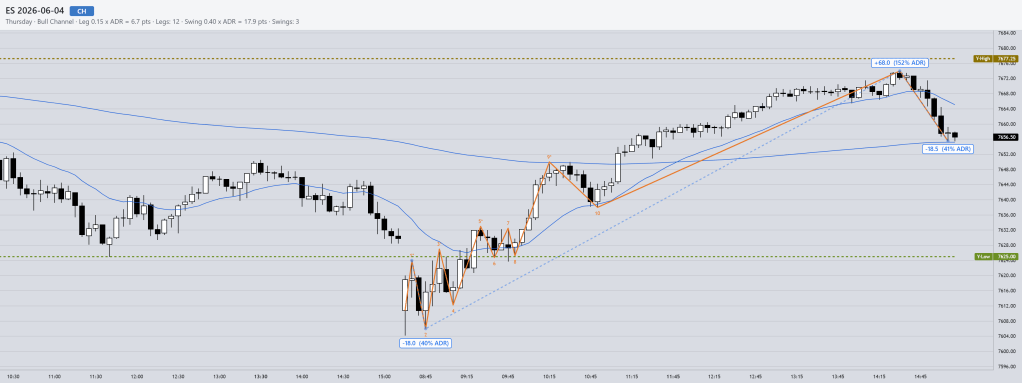
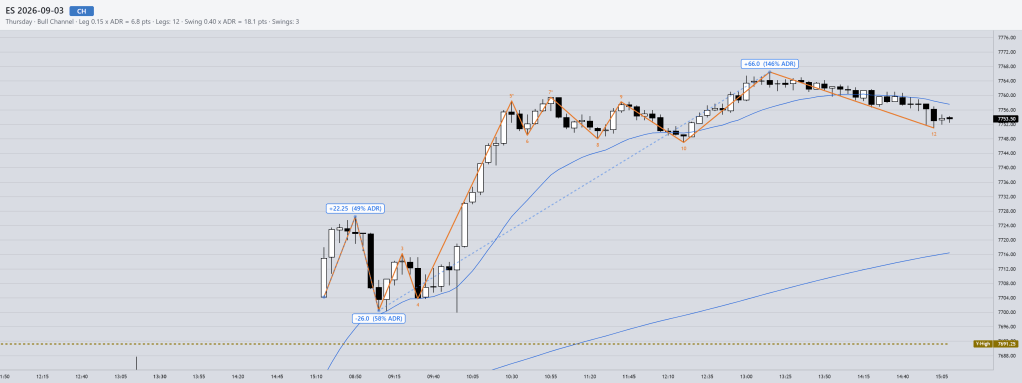
Channel Trend Day
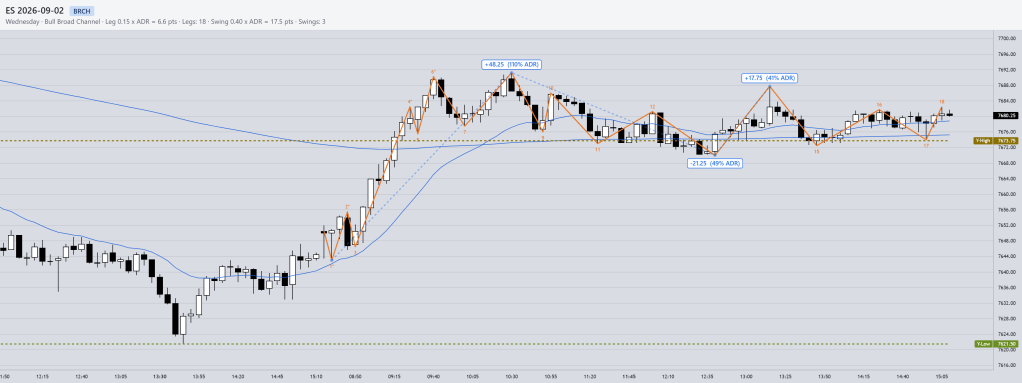
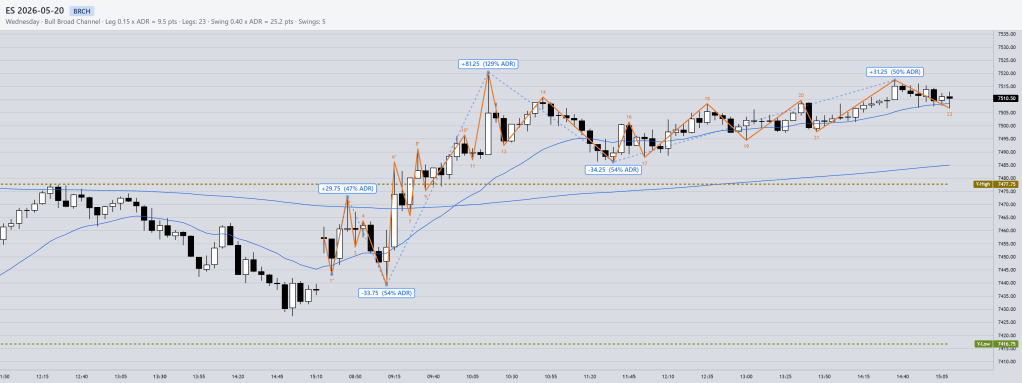
Broad Channel Day
Trading Range Day
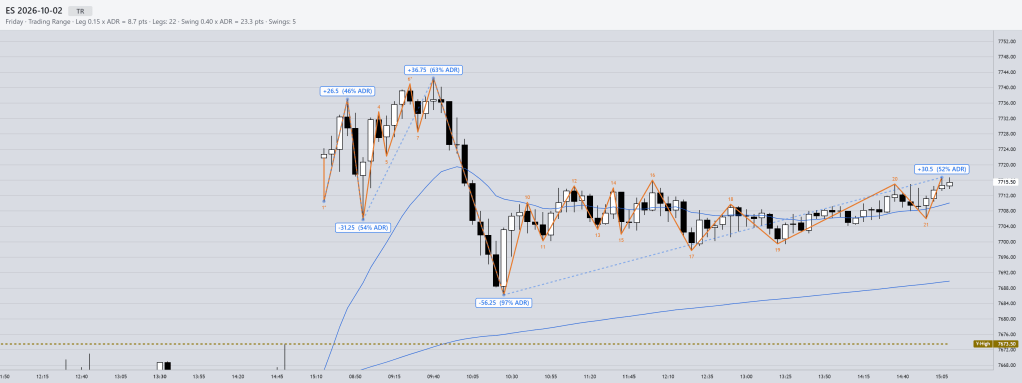
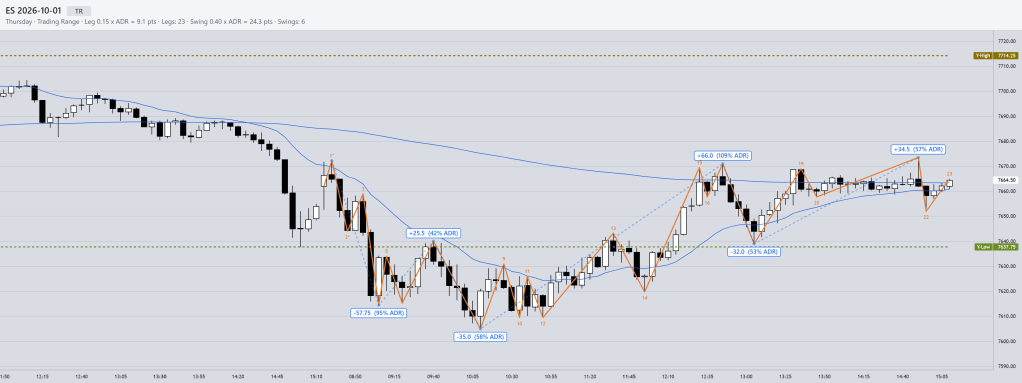
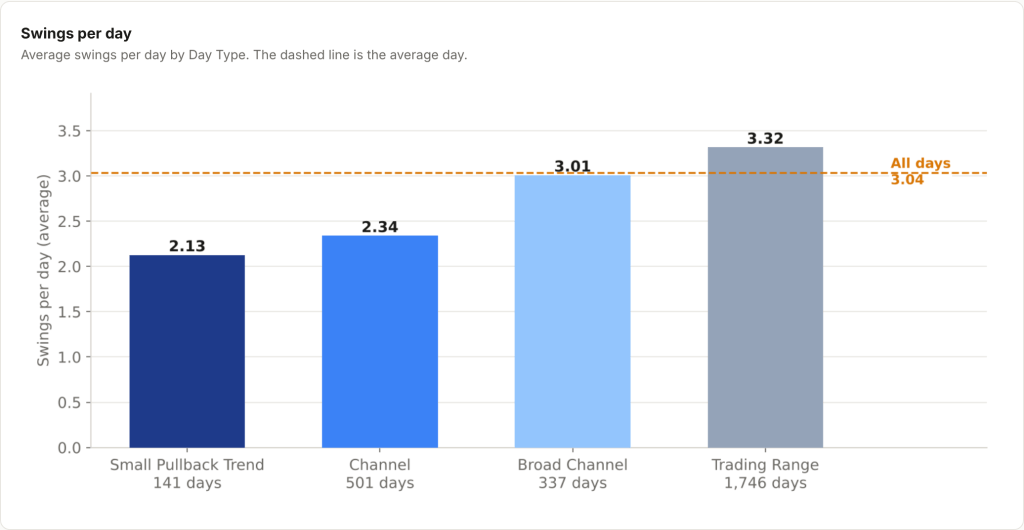
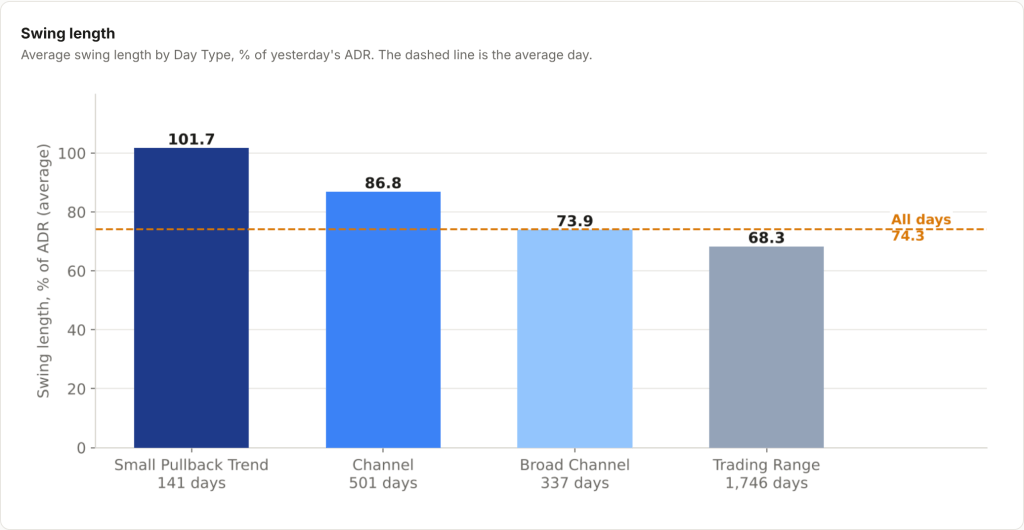
And there it is. Both trend groups make fewer swings: Small Pullback Trend 30% fewer than the average day, Channel 23% fewer. And the swings are longer: 37% and 17% longer.
Broad Channel is the average day. Trading Range makes a few more swings, and they’re 8% shorter.
Caveman version: trend day = fewer swings, bigger swings. Me swing club.
One swing all day
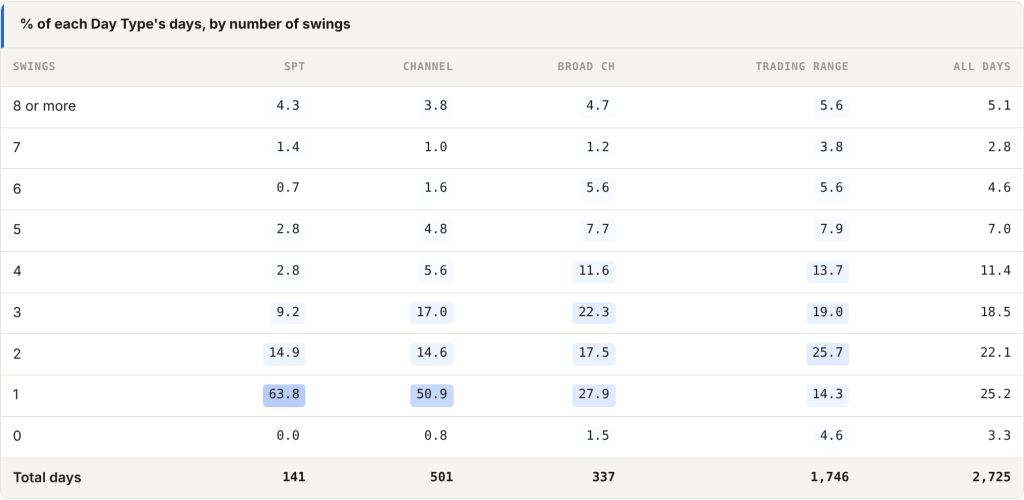
Read the “1” row. 64% of Small Pullback Trend days and 51% of Channel days are one swing all day. Only 14% of Trading Range days are.
I was not expecting that – but with my definition of a swing going on until a counter-swing happens – it makes sense.
I can’t wait to put this into my pullback trading next week.
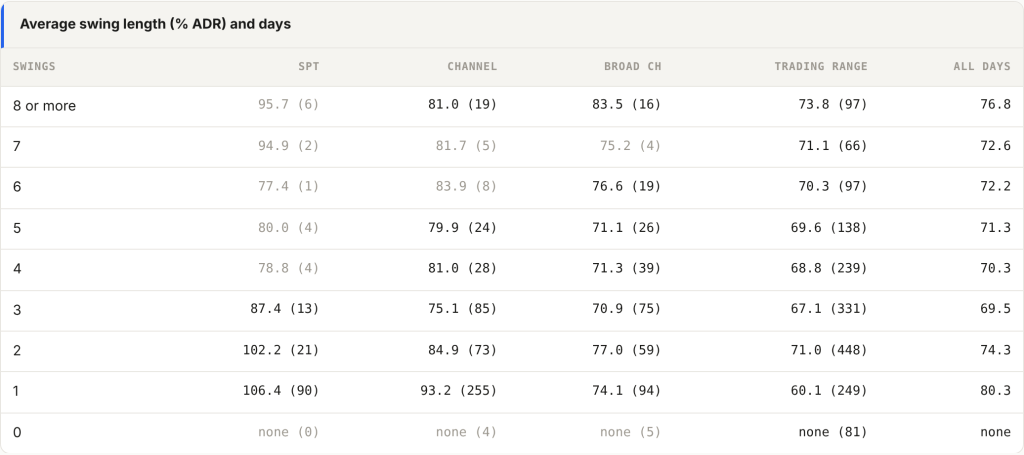
And on a one-swing day the size gap is big. A one-swing Small Pullback Trend day averages 106% of ADR in that one swing. A one-swing Trading Range day averages 60%. Same count, very different day.
What’s inside a swing
So if trend days have the same size legs, how do the swings get so long? I broke every swing into its legs.
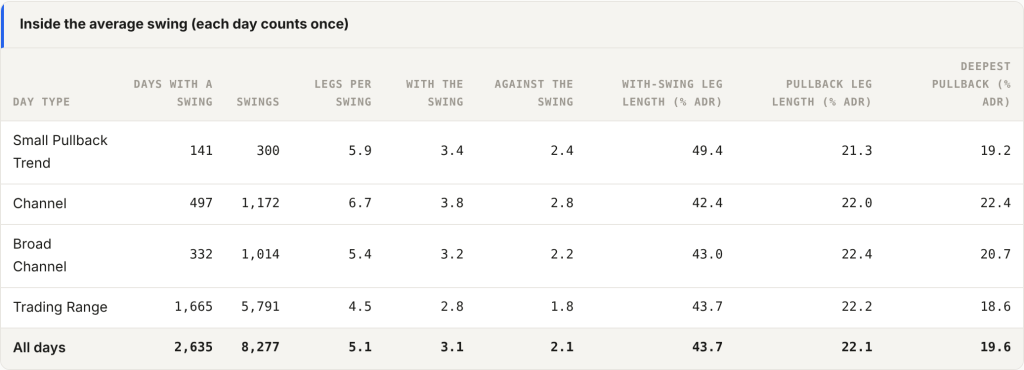
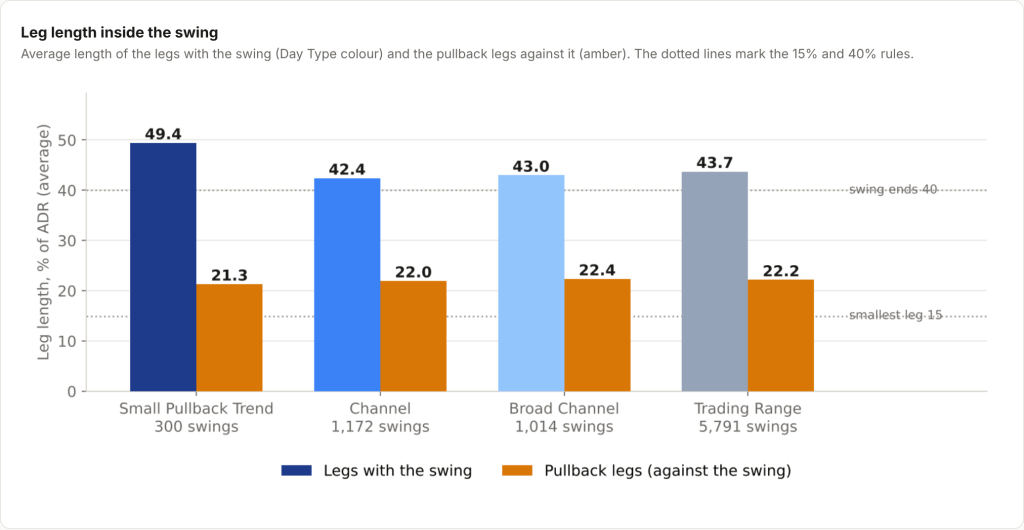
Here’s the bit: the pullback legs are about 22% of ADR on every type of day. Trend days do not have smaller pullbacks. The rules box them in – a pullback leg has to be at least 15% to count, and less than 40% or it ends the swing – but inside that box they’re the same everywhere.
What changes is how long the swing keeps going. Channel swings hold the most legs of any day type, 6.7 on average.
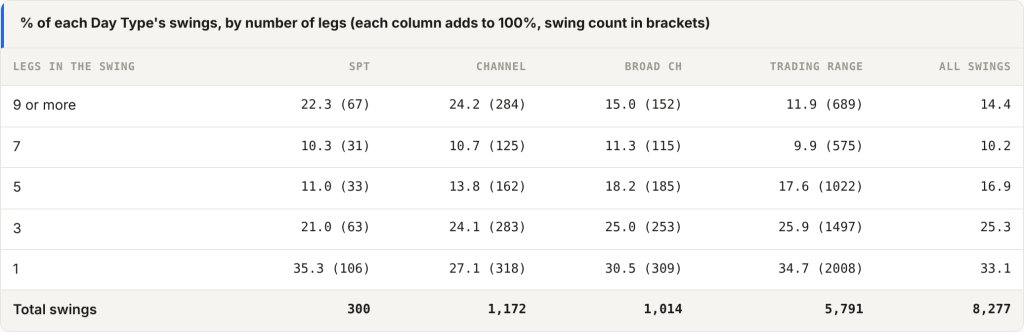
About a quarter of Channel swings and a fifth of Small Pullback Trend swings run 9 legs or more. On Trading Range days it’s about one in eight.
Now think about what’s happening from inside the trade. On a Channel day you sit through pullback after pullback, each one the same size as on any other day. Nothing tells you this one is different. It just keeps going.
Why I think swing trading is the link
In the leg counting post I wrote “if you’re a scalper like me, many legs = many opportunities.” Still true. But look at how a scalp lines up against a swing.
A scalp is 10% of ADR. A trend day swing averages 87% to 102% of ADR, close to a full day’s range. If you only scalp, you take the same kind of losses on every type of day. But on the trend days – about one day in four – you only ever take 10% bites out of a move that runs ten times that.
So I think most traders will do better trying to become swing traders, and then scalping out of the swings. Versus just being scalpers. The upside on trend days is something I think you really need in your equity curve.
Caveats
- Everything here is measured at the close. It describes the days. It doesn’t tell you what today is while you’re in it.
- Day types are my own hand labels, so my eyes are in the data.
- Every size is against yesterday’s ADR. A day much bigger than yesterday counts more legs and swings.
- Bull and bear are together. From the trend day post, up-trends run tighter than down-trends, so that split is next.
- I split the dates in half (before and after April 2021) and the order of the day types held in both halves.
Conclusion
Legs didn’t find my trend days. Swings can. Trend days make fewer swings and longer ones, with the same size pullbacks as any other day.
Here’s a question for you. Pull up yesterday’s chart. How many swings did it make, and would you have held the biggest one?
Happy trading!
Tim
Zen Trading Tech



Leave a comment