-
 Continue reading →: How to Research Bar Range Dynamics Using an Indicator
When you’re trading intraday, not all bars are created equal. Some are narrow and quiet — a sign of hesitation. Others are wide and explosive — often signalling strong conviction or emotional capitulation. Being able to classify and study these different kinds of bars can give you a deeper understanding…
-
 Continue reading →: 🕓 Globex H/L Breaks: A Simple Tool for RTH Session Awareness
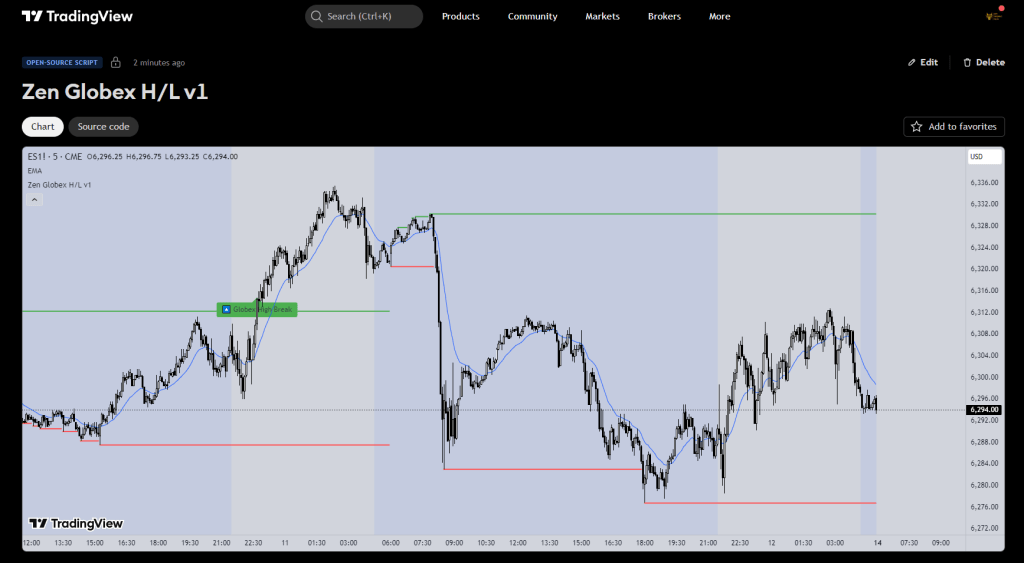
If you’re day trading the ES futures or similar products, understanding the relationship between the Globex (overnight) session and the Regular Trading Hours (RTH) session is critical. The Zen Globex H/L v1 indicator is a simple research tool that tracks the Globex High, Low, and Open—and shows you when the…
-
 Continue reading →: 🔍 Researching the RTH Open: Consecutive Bull/Bear Bars
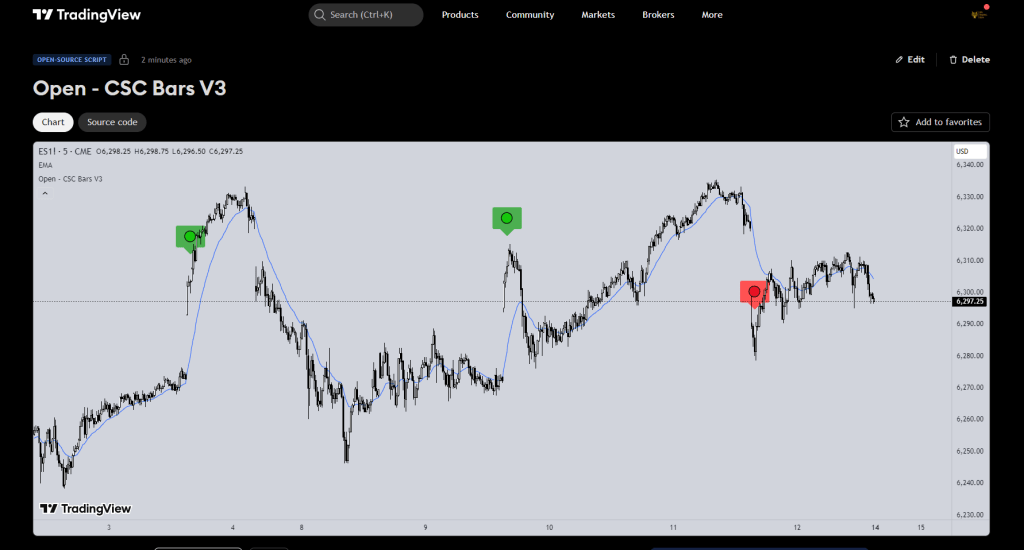
The open of the Regular Trading Hours (RTH) session is one of the most volatile, emotional, and misleading parts of the trading day. Many traders are drawn to spikes that form in the first few minutes—only to get caught fading strength or chasing weakness. Statistically, a large percentage of opening…
-
 Continue reading →: 📊 Inside/Outside Bars — What They Really Tell Us About Daily Breakouts
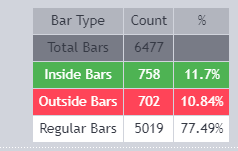
Most traders know what an inside bar is. Most traders know what an outside bar is. But very few traders actually study how often these patterns show up—and what that might mean for their intraday strategy. I wanted real numbers. So I wrote a simple tool to count them. Here’s…
-
 Continue reading →: 🔍 A Simple Visual Tool for Spotting Spikes, Second Legs — and Now, Counter-Trend Reversals!
**Excerpt:** A clean visual tool for spotting momentum bursts, second legs, and now — potential counter-trend reversals. The latest update to the Zen 3CSC script adds an EMA-based filter to isolate exhaustion moves and failed breakouts, making it easier to study price behavior around key turning points. Ideal for traders…
-
 Continue reading →: 18-Bar Range: A Simple Tool for Traders Studying the Open of the Day
Built for traders using the Al Brooks Method Updated Aug 2025: v5 Available This free TradingView indicator helps you study how the first 18 bars of the regular trading hours (RTH) session affect the rest of the day. It’s designed to support the kind of market reading taught in the…
-
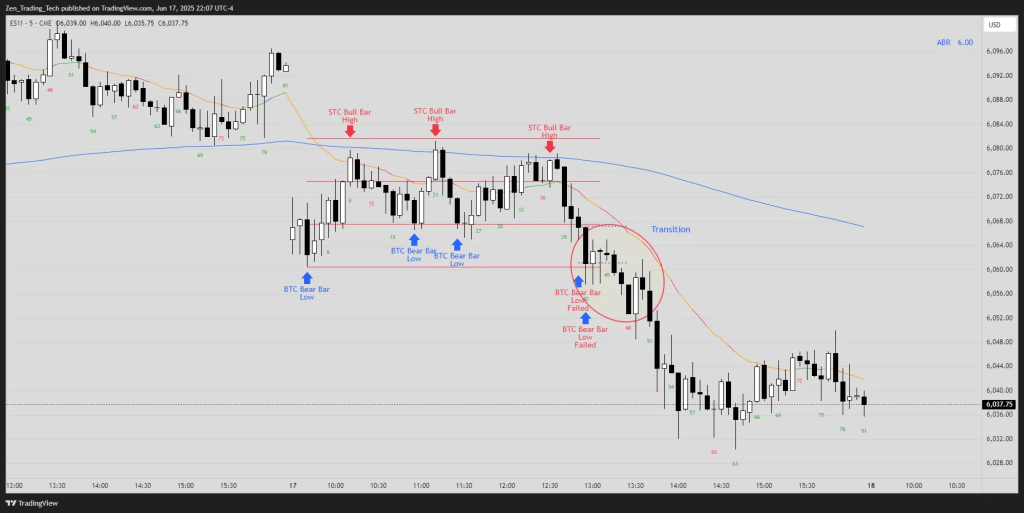 Continue reading →: Trading Range Day – Interesting Practice Drills
On ES, 16th June, 2025 there was a number of great setups – I missed some, I got some, some worked, some didn’t. But you can take those and practice them for next time H1 Failed – L1 Failed H1 and L1 work in trends and fail in trading ranges…
-
 Continue reading →: From Idea to Edge: One Trader’s Process for Setup Research
Introduction I often get asked how I research different setups. I’ve never actually written out my process before—this is my first go. What I’ve shared below is just one way I approach it. It’s not the only way, but it’s helped me turn ideas into something more concrete. I’m not…
-
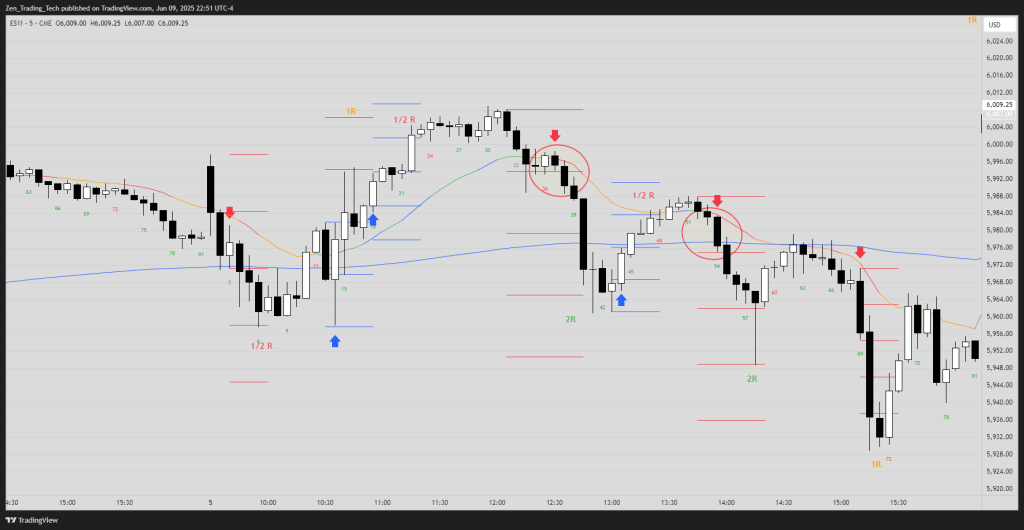 Continue reading →: Trading in Trading Ranges: 1/2R -> 1R
Introduction This is not a full system—just a look at a key behaviour that shows up often in trading ranges. I think it will help no to get frustrated and get back IN SYNC with what institutions are doing. Main Idea In trading ranges, traders don’t expect swing trades. You’re…
-
 Continue reading →: 🧠 Study Trade Failures: Obsess Over Exits
Most traders focus on where to get in. Few study where a setup breaks. This post walks through a wedge example and shows why knowing what shouldn’t happen is just as important as knowing what should. The real edge? Spotting failure early and cutting with precision.
-
 Continue reading →: 📊 The #1 Trading Mistake: Confusing Setup with Signal
Let me make it simple: No setup = no trade idea. No signal = no entry. In my reviews with hundreds of traders, there’s one mistake I see more than almost any other.It’s subtle, but it sabotages your entries, messes with your stop placement, and creates hesitation in the moment.…
-
 Continue reading →: 🎯 Same Trade, Two Outcomes – What That Really Means
Every trader eventually faces this moment:“I took the same setup two days in a row. One worked. One didn’t. What did I do wrong?” A trader recently sent me this exact question after trading two microchannels—one long, one short—with completely different outcomes. It’s a great question because it cuts to…
-
Continue reading →: Brooks Trading Course – European Trading Room Trial
✅ Webinar Links Start 30 mins before Frankfurt Open (8:30am CET European Time). Run for 3 hours. 20th May, 2025 https://attendee.gotowebinar.com/register/7210129310403638871 22th May, 2025 https://attendee.gotowebinar.com/register/6620457925892506454 🎯 Outcomes Help traders: Join in on the European Session! Even if you don’t/can’t trade those instruments. Apply Brooks Trading Course materials to other instruments…
-
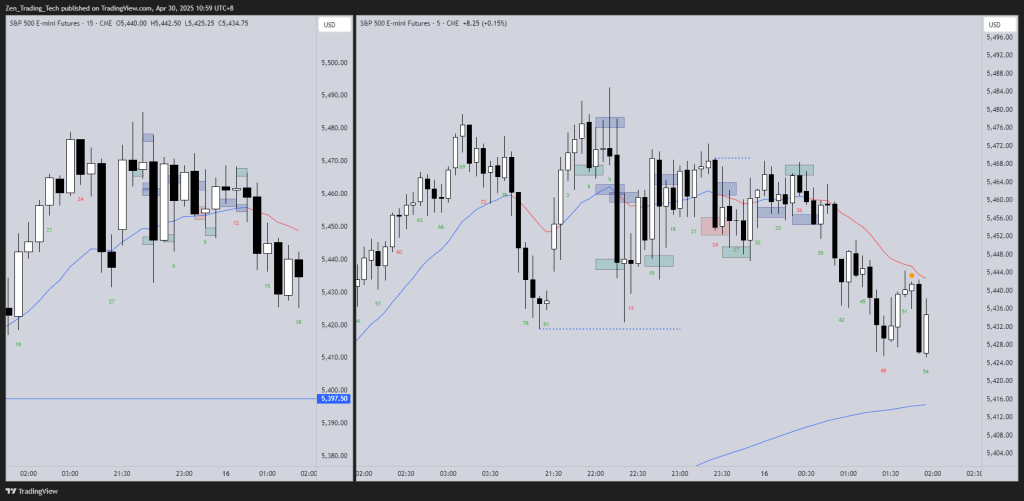 Continue reading →: How to Use 15-Min Charts to Confirm 5-Min Trade Setups: Trade Review Drill
Traders can enhance their strategies by using both 5-minute and 15-minute charts. Reviewing trades on the longer timeframe helps identify alignment with market structure and avoid mistakes. It encourages better timing and decision-making, reducing confusion. Practicing this routinely fosters improved trade execution and greater awareness of market dynamics.
-
 Continue reading →: 📈 1:1 Review Drill: Are You Always on the Wrong Side?
Here is a simple way to sharpen your entries:Split the range into halves and review your trades. Ask yourself: Are you consistently trading the wrong side of the range? Are you using a stop that actually makes sense based on structure? If you are closing early, do you have a…
-
 Continue reading →: Micro-Gap Reversal– Youtube Video is up!
I did a short video on ways you can use the indicator here. We’ve have a few great setups using this already this week. Hope it inspires you to research PA further. Cheers, Tim Original Post: Link to the indicator Zen MIG Reversal V1 on TradingView Note: This is not…
-
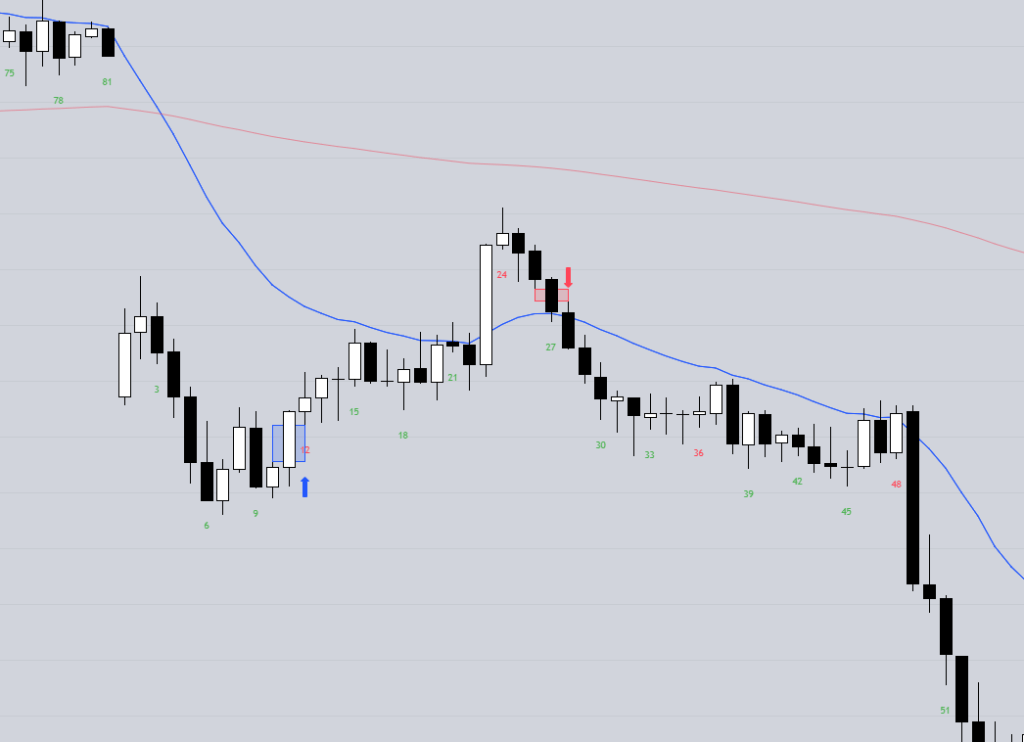 Continue reading →: The Micro-Gap Reversal– A Simple and High Probability Pattern
This indicator is built to highlight a specific kind of 3-bar structure — something I’ve seen repeat after momentum gaps or aggressive moves. it is a micro-gap (gap between 3 same-colour bars) on the WRONG side of the moving average. Bears getting 3 consecutive bear bars ABOVE the MA? MIG…
-
 Continue reading →: The First Three Bars: A Simple Tool for Deep Research
Today I’m sharing a new indicator I built for exactly that purpose. It’s called “3 CSC Bars”, and it does one thing only—but it does it well. It highlights the first three bars of the RTH session if they’re all bullish or all bearish. https://www.tradingview.com/script/exepFQlW-Open-CSC-Bars-3/ Why does that matter? Because…
-
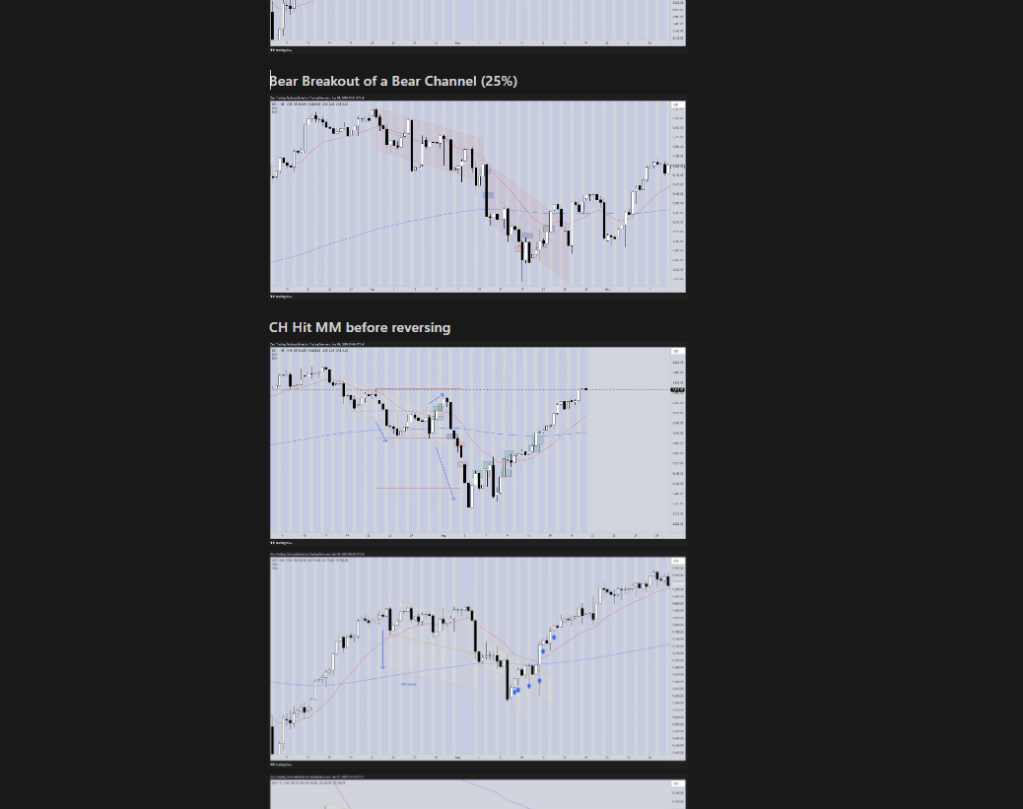 Continue reading →: 🧠 Build Your Own Trading Encyclopaedia – Part 1
Want to really understand a price action pattern? Don’t just memorize someone else’s notes—rebuild them yourself.This post shows you how I do it, using “Channel Failures” as the example. Below the post I include my notes for you to kick off from. 📚 The Exercise The goal is simple:Take a…
-
 Continue reading →: Build Your Edge Before the Market Opens: Why I Use Flashcards to Train
Most traders think their edge is in their strategy. But the deeper I’ve gone into this game, the more I’ve realized: My real edge is repetition. Pattern recognition. Conditioning. Preparation. What are my repeated weak behaviours in trading and how I can improve on them to become better. Let me…
-
 Continue reading →: Effective Trading Strategies: Unlocking the Power of Shaved Bars
Introduction to Shaved Bars A shaved bar is a bull bar with no or minimal lower tail (less than 10% of the total bar size) or a bear bar with no or minimal upper tail (less than 10% of the total bar size). This indicator places an arrow below a…
-
 Continue reading →: Mastering Urgency in Trading with Shaved Bar Indicator
In fast-moving markets, timing is everything. One of the most powerful signals is the shaved bar: a bullish candle with no lower tail or a bearish candle with no upper tail. These bars show no overlap with prior candles, signaling clear intent and momentum. Update – go here for the…
-
 Continue reading →: Trading Price Action in Motion: Watch These ES Futures Trades Play Out!
In this video, I present a market replay showcasing both the trades I took and the ones I skipped or missed — all focused on Al Brooks-style price action entries. I also replayed different ways to trade the same setups. 🛑 No voice commentary — just clear, fast-paced trade replay…
-
 Continue reading →: 10 Powerful Strategies for Trading Channels
Introduction In this post, I’m going to talk about entering tight channels. I’ll review a variety of different ways we can approach a tight channel, with the goal of helping you develop a method that suits you. For a long time, I struggled to enter tight channels, often looking back…
-
 Continue reading →: Mastering Scalping with ABR Levels – A Simple Risk Management Tool
Scalping is all about precision and timing. And one of the biggest mistakes traders make? Ignoring volatility. That’s where ABR Levels (Average Bar Range Levels) come in – a simple but powerful tool to help you scale your trades dynamically and avoid unnecessary losses. What Are ABR Levels? ABR Levels…
-
 Continue reading →: Zen R Targets – The Ultimate 2R Calculation Tool for Traders
Planning trades with clear risk-reward targets is essential for professional traders. The Zen R Targets indicator simplifies this process by automatically calculating 2R profit targets based on your preferred entry method—either a Stop Entry or a Close Entry. Whether you’re a price action trader following Al Brooks methodology or a…
-
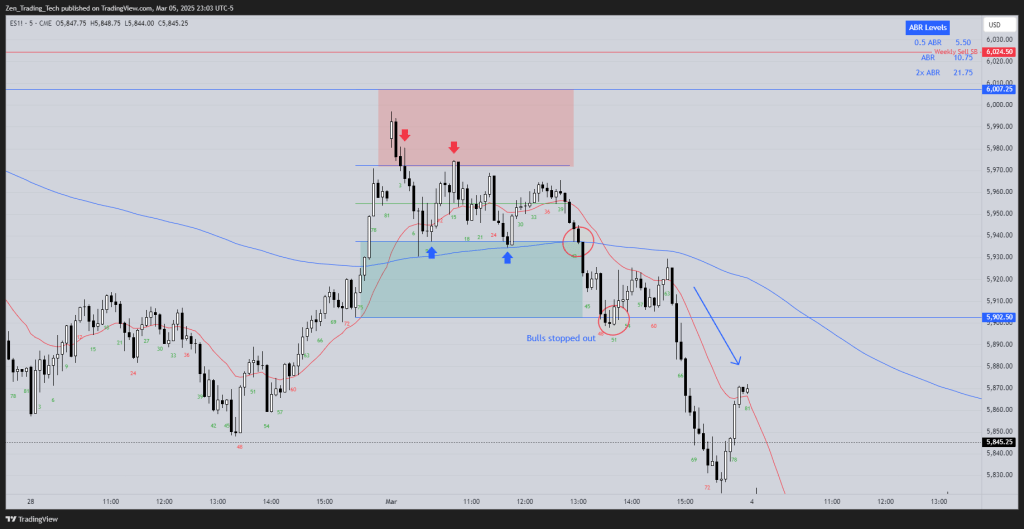 Continue reading →: Trading in a Trading Range: Hot Zones and Stop Hunting
Trading in a range can be frustrating—until you learn to see the hot zones where traders are making their moves. I will stay take losses. But I have a better chance of not getting in repeated reversals which will take my profit away from my prior good trades! After studying…
-
 Continue reading →: How to Reset Your Trading Mindset
Key Takeaways Process over outcome – The first goal isn’t to win trades; it’s to execute correctly every time. A good trade = correct process. A bad trade = incorrect process. Change personal views into practical views. I can’t control what the market does, only what I do. Resetting isn’t…
Hi,
I’m Tim

Welcome to Zen Trading Tech.
I’m a Aussie day trader and I post trading tips, practice drills, and indicators that helped my trading get to a professional level.
Everything here is to help train the eyes and hands to trade better. If it helped me I’ll post it for others. Hope you enjoy!
Join the fun!
Stay updated with our latest tutorials and ideas by joining our newsletter.