-
 Continue reading →: Essential Trading Skills: Using Spikes and Stop-Order Entries
Introduction In this post I will bring together two powerful concepts in price action – spikes and stop-entries. Combining these will lead to high-probability trading There are some earlier indicators and videos I recommend you watch prior to this one to give it context Video Prior Reading Identifying spikes Spike…
-
 Continue reading →: Mastering Time Frame Analysis in Trading: HTF -> LTF (Part 2)
Intro Higher time frame and lower time frame analysis is very important in staying relaxed in trading In the first post and video I explained the exercise But this was only for channels. It can be used on every pattern Here is part of my homework from this morning Video…
-
 Continue reading →: Effective Trading Techniques: Higher vs. Lower Time Frames (Part 1)
Intro Higher time frame and lower time frame analysis is very important in staying relaxed in trading Video I made a video on this here: Dr Al Brooks Trading Course Slides Different strengths in channels https://www.brookstradingcourse.com/ Drill Instructions: Instructions Find a market structure you don’t understand Then go up a…
-
 Continue reading →: Zen ABR Target – Precision Scalping Indicator with Average Bar Range
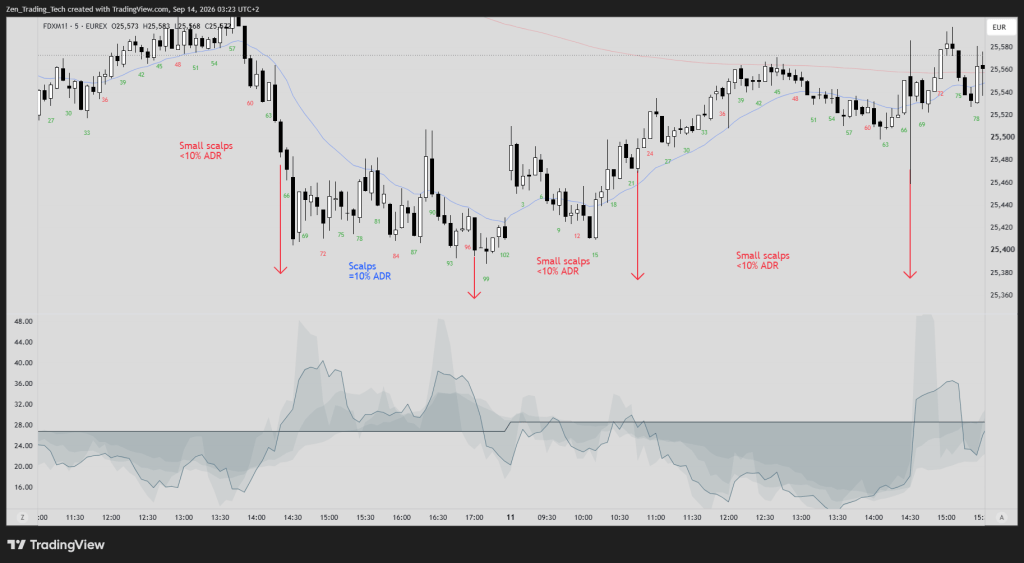
Intro If you’re looking to improve your scalping strategy, the Zen ABR Target is the perfect tool. Designed for TradingView, this indicator uses the Average Bar Range (ABR) to assess if the next bar meets the target, helping you gauge market momentum and identify potential trading ranges. The indicator shows…
-
 Continue reading →: Master Scalping with Zen Bar Range: A Powerful Free Indicator for TradingView
Link https://www.tradingview.com/script/vOumw4w0-Zen-Bar-Range-v1/ Video I made a video on this as well here Intro In the fast-paced world of trading, scalpers thrive on precision, speed, and the ability to capture small price movements for consistent gains. But how do you ensure that you’re entering and exiting trades at the right moments?…
-
 Continue reading →: Stop-Order Entries
Intro This is an important foundation for trading and for successfully trading both trends and trading ranges. Without this understanding, losing money in trading ranges is basically guaranteed. Video I made a video on this here: Indicator Here is a free indicator to research stop entries Link below: https://zentradingtech.com/2024/09/29/unlock-breakout-potential-with-an-indicator-for-stop-order-entries/ Instructions…
-
 Continue reading →: How to Identify Spike Patterns in Trading
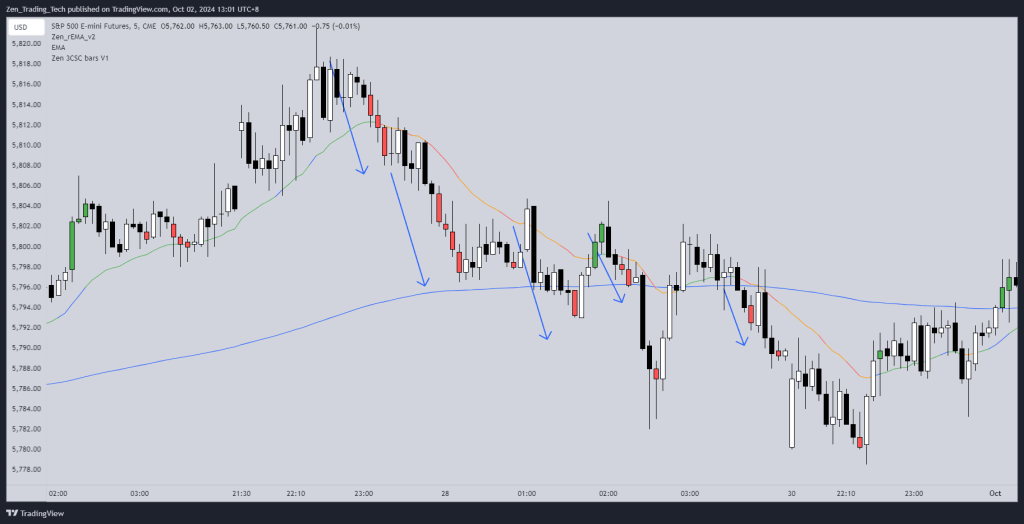
Video I made a video here: Indicator Click here to find it Spikes 3 CSC bars indicator First train 3 Then practice 2 Then look for one big bar 1. Mark Up 3 Consecutive Bars Use the indicator or draw arrows for all 2. How Often do they have 2nd…
-
Continue reading →: Unlock Breakout Potential with an Indicator for Stop Order Entries
Intro This is an indicator to help traders research where stop entries are located It is a foundational skill for trading A clear way ot determine whether a trend or a trading range is in progress is whether these are working or not Indicator Here is a free indicator to…
-
Continue reading →: Mastering Trendline Breaks for Effective Trading
Intro Trendline breaks are often are followed by a test of the H or L and then a reversal. Many traders will lose money on that failed breakout So this drill is to help reduce those losses Video I made a video on this here: Drill 1: Trendlines – Break-…
-
 Continue reading →: How To Use Al Brooks Encyclopedia
Intro So you’ve done the BTC Brooks Trading Course, you may or may not be in the traderoom, how to keep improving? Well apart from hammering the drills I keep posting you should get the Brooks Encyclopedia. Video Check out the video here! Finish The course As I have been…
-
Continue reading →: Trading Skills #31: Breakout H1 / L1
Summary How to enter breakout trades Video Link Drill 1: Find H1 / L1 (Stop Entry) Instructions Breakout to new high or low (Can be of the day, can be out of a range), mark with an arrow Pullback Next signal bar same direction (reasonable) Order 1 tick beyond the…
-
Continue reading →: Trader Skills #30: Wedges – 3 Push Patterns
Intro Once do this drill you will see them everywhere It will give you more confidence in reading price action if you practice it Video See more details here: Leg Counting: 3 Ways Pullback goes below low of prior bar in bull leg Pause – sideways / inside bar /…
-
Continue reading →: Trader Skills #28: Is YD a Good Signal Bar?
Premise This explains how we can use the DAILY chart to help us find swing setups on the open and the rest of the day. Video I made a video below with many examples The 6 Decisions Towards the end of the bar, traders are finalising 6 decisions. These decisions…
-
Continue reading →: Trader Skills #27: 60m Bars – What did traders do?
Video Intro Welcome to the exciting world of ES price action trading! If you’re like me, you’re always on the lookout for new ways to up your trading game. One trick I’ve found incredibly useful is using 60-minute bars to guide my trades on the 5-minute chart. It might sound…
-
Continue reading →: Trading The Open: Open in YD range?
Concept How does WHERE we open impact the first few trades of the day? Video I did a video about part of this process here: Research There are a few common groupings of opens I found interesting and possible ideas for building trading strategies around them which I’ll share here.…
-
Continue reading →: Trader Skills #29: Doing Good Work
Intro Turning notes from a trading session into homework which improves ability is key to getting better. Following a process, any process, is better than my feelings. When I trade well, I don’t do any homework. When I trade poorly, I do lots of homework. Better to continually get better…
-
 Continue reading →: Indicator: Breakout and FT: Close > Prior High
Video Intro This indicator is to TRAIN the eyes to follow the direction of the strongest breakout and followthrough. It is also a good indicator or market structure: when it works we are trending when it is failing we are in a trading range or broad channel The Zen Breakout…
-
 Continue reading →: Trader Skills #26 : Leg Counting
Intro In price action trading we look at relationships. As price moves in pulses / waves we look at their relationships to each other and what came before it. In the hope to profit from what comes after it. Counting these helps improves our price action reading skill. This can…
-
Continue reading →: Practice Drills #2
Todays research ideas I reviewed: 1. Tight channel, break trend-line, new low, reversal 2. Which side is controlling price and time more clearly? 3. Have those limit order traders got a profit targets to justify their risk? 4. Pullback = actual risk => target 1 – 2x aRisk 5. Traders…
-
Continue reading →: Practice Drills #1:
New style of post. I research other traders I like and take notes. I watch webinar recordings, read their books, videos, whatever I can find. Then I use those notes as my homework for the day. So for each item I will do a certain # of charts or #…
-
Continue reading →: Letting Go
Intro One of the great things about trading is that it is constantly teaching me to let go. I cannot control the outcome no matter what. I can control the process. I can select a reasonable entry. I can select the correct stop. I can select as appropriate target based…
-
Continue reading →: Trading Skills #25: 60m targets on the Open
I’m hoping this little piece on 60m targets from the ETH and RTH into the open will help you swing for the fences! ETH 60m session top left RTH 60m session bottom left Little lines on the 60m charts (Left) are 1R targets. By aligning myself with these targets I’m…
-
 Continue reading →: Trader Skills #27: Emotional Training in Trading
Intro Today’s post comes from a friend who asked me to review his trades. It takes courage to do this. I don’t like doing it, but I’ve trained myself to do it anyway. I have used the information to structure a formal post. It has recommendations and lacks anything personal…
-
 Continue reading →: Trader Skills #24: Weak SB Good FT | Strong SB Bad FT
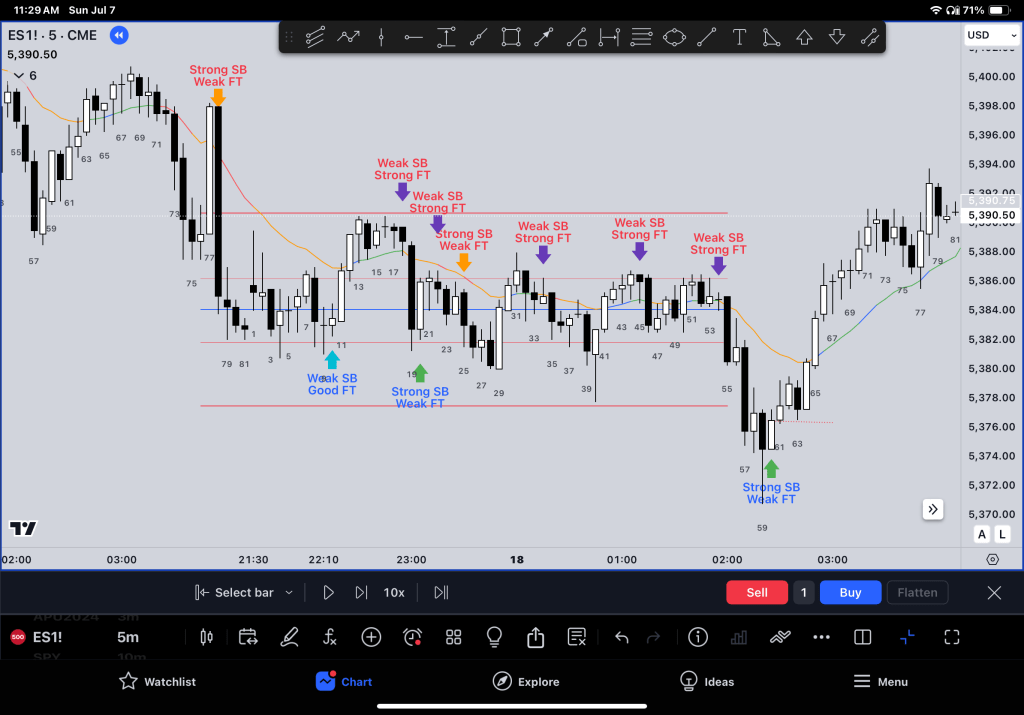
Premise This review focuses on the follow-through bar (FT) and market trends. It identifies if the market is in a trend or trading range. Traders make decisions based on context and the signal bar. Context or the trend matters more than the signal bar for reversals, not trends. A strong…
-
 Continue reading →: Trader Skills #23: Trading Ranges Second Entries
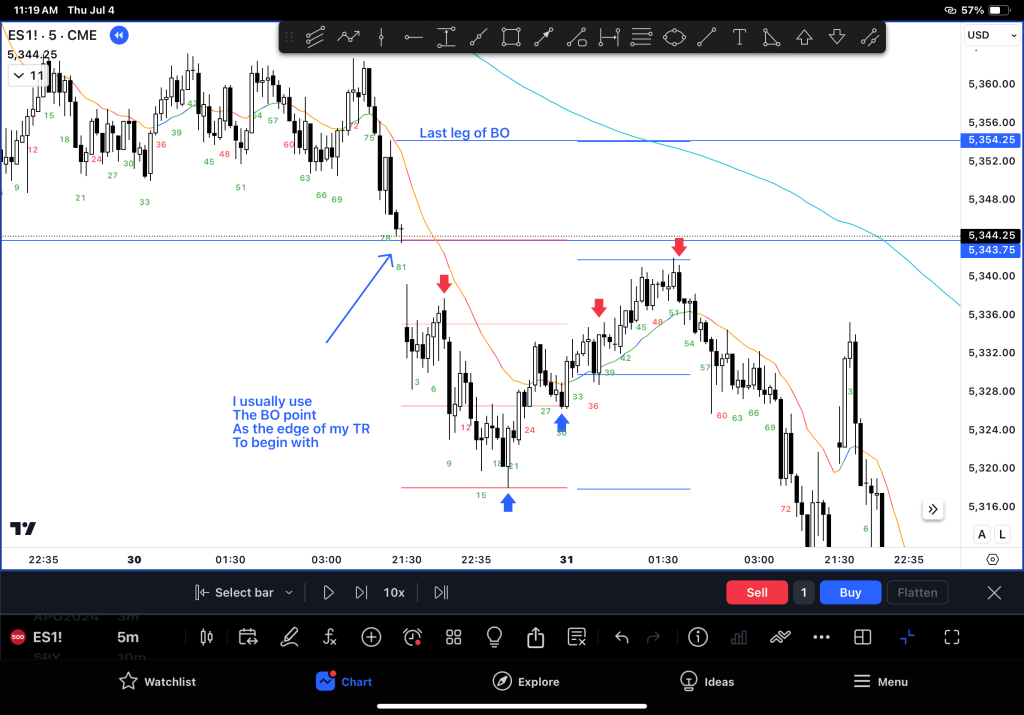
Summary – Trends BO and FT – Trading Ranges don’t – so they fail and reverse and FT – So fading BO’s in the TR is the key skill to develop Investigation – In the chart below, you can see one side DOESN”T get the 2nd entry… that’s a sign…
-
 Continue reading →: Trader Skills #22: Pullbacks after 5 – 6 bars
Intro This is a funny one. I’m not sure if it is one of the RAS (Reticular Activation Systems) things where once you hear about it you find it everywhere. Seeing what you wanna see is a classic trader error I have to be aware of in myself. Either way…
-
 Continue reading →: Indicator – Breakout Overlap
Chart Link https://www.tradingview.com/script/azz12NIL-Zen-Breakout-Overlap-v1/ Summary Looking at where bars create gaps between it and the prior bar I was researching follow-through bars and good targets for them – it seems 1:1 is reasonable unless they themselves are the biggest bar – then half is more likely like above How to use:…
-
 Continue reading →: Trading Skills #21: Spikes – H1/H2, L1/L2 and Failure
– One of the key skills I need to day trade is the ability to distinguish between a trending environment and a trading range environment. – One way to do this is using Al’s inertia concept “In a trend, 80% of reversals fail. In a trading range, 80% of breakouts…
-
 Continue reading →: Indicator – Spike Breaks
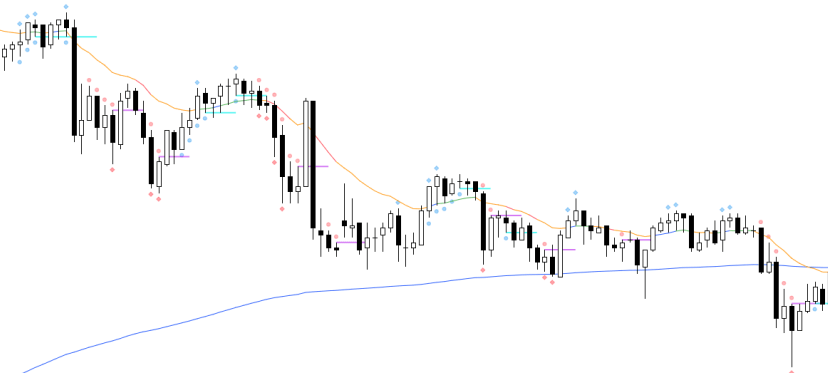
Intro Please find a spike break indicator for research Indicator https://www.tradingview.com/script/EcZyPa3A-Zen-Spike-Break-v1/ Code For those that are interested the code is here. //@version=5 indicator(‘Zen_Spike_Break_v1’, overlay=true, max_lines_count = 500) bool plotspiketermination = input.string(“On”, “Show spike termination?”, options = [“On”, “Off”]) == “On” bool plot4H_or_4L = input.string(“On”, “Show 4 Highs or Lows?”, options…
Hi,
I’m Tim

Welcome to Zen Trading Tech.
I’m a Aussie day trader and I post trading tips, practice drills, and indicators that helped my trading get to a professional level.
Everything here is to help train the eyes and hands to trade better. If it helped me I’ll post it for others. Hope you enjoy!
Join the fun!
Stay updated with our latest tutorials and ideas by joining our newsletter.